To treat borer, you put a long-lasting insecticide or preservative onto bare timber, so it is still working when the next adult beetles chew their way out or try to lay eggs. Painted or varnished timber is treated by injecting the flight holes instead. Sprays in the air and "bombs" only kill adult beetles flying around, not the larvae inside the wood. This is part of our guide to borer treatment in Auckland. Below: what actually kills borer, what you can do yourself, and when a professional is the better call.
What kills borer in wood?
A residual surface treatment kills borer in wood. It is an insecticide or preservative that soaks into bare timber and stays active for years. Larvae tunnel inside the wood for two to four years, so the product has to outlast that cycle. When the adult beetles emerge, or a female lays her eggs on the surface, they meet the treated timber and die.
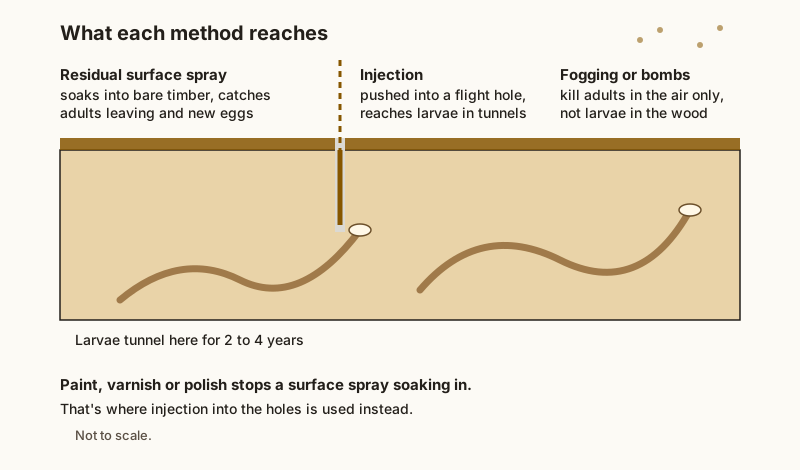
Consumer NZ describes a residual surface application as the only long-term DIY treatment. It has to go on bare wood. Paint, varnish and polish stop it soaking in.
How each method reaches the borer:
| Method | What it reaches | What it misses |
|---|---|---|
| Residual surface spray on bare timber | Adults leaving the wood, eggs and young larvae near the surface | Nothing, as long as it outlasts the life cycle |
| Injecting flight holes | Larvae in the tunnels behind painted or polished surfaces | Areas with no holes yet |
| Fogging or "borer bombs" | Adult beetles flying in a roof void or subfloor | Larvae inside the timber |
| Fumigation (a professional job) | Everything inside a sealed item, such as furniture | Leaves no protection behind |
Can you treat borer yourself?
Yes, for small, easy-to-reach areas. You can treat a few floorboards, a piece of furniture, or a shed with a residual borer spray, and inject holes in painted timber. Call a professional when the borer is in the subfloor, roof void or wall framing, when the area is large, or when the timber feels soft. Big jobs need protective gear and the right equipment.
A DIY job usually looks like this:
- Check it is active. Look for fresh, pale holes and fine powder that comes back after you vacuum it up.
- Strip the timber back to bare wood where you can, because surface sprays can't get through paint or varnish.
- Spray or brush on a residual borer treatment, following the label exactly.
- Inject the flight holes on painted or polished timber.
- Check again next flight season, roughly October to March, for new holes.
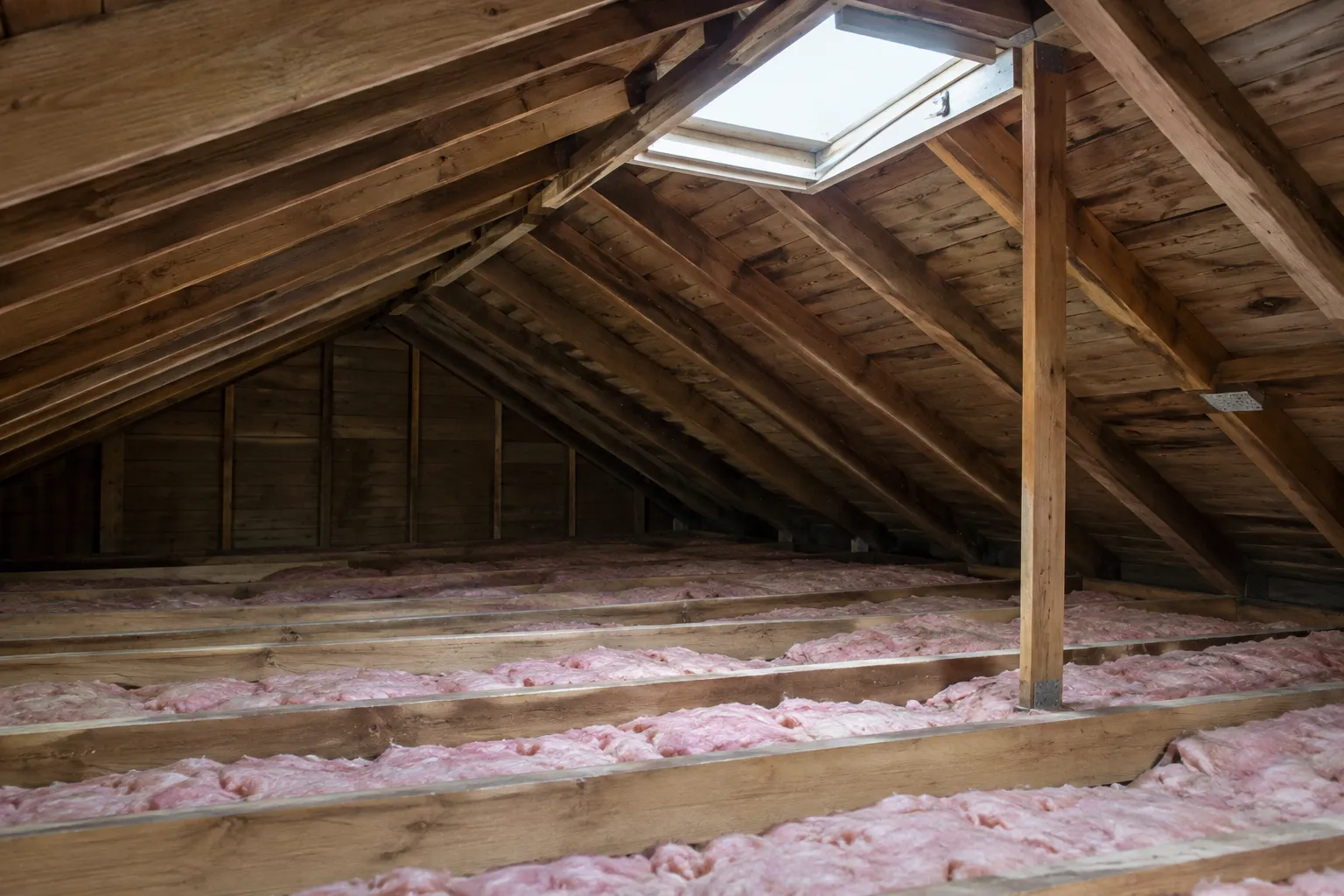
The jobs to leave to a professional are the ones under the house and in the roof. That means working on your back in a tight subfloor, or around insulation in a roof void, using a sprayer and a respirator. Consumer NZ advises that large infestations are handled by a professional with the right safety gear.
What are the best treatments for borers in New Zealand?
In New Zealand, the best treatment is the one that matches where the borer is. Use a residual surface spray on bare timber in the subfloor and roof void. Inject flight holes in painted, varnished or polished timber. Fumigate or inject furniture. Replace timber that has gone soft. Bombs and fogging only help as an extra step during flight season.
The common house borer, Anobium punctatum, is the species most Auckland homes deal with. It attacks the softer sapwood of timbers such as untreated pine and older native timbers. A native borer and the larger two-toothed longhorn also turn up in buildings, and they get the same treatment.
When an infestation has gone too far, the treatment is repair. Consumer NZ says badly weakened timber should be strengthened or replaced. It also says borer showing in weatherboards usually means the damage goes further than it looks, so treat the framing while the wall is open.
What kills wood borer naturally?
No natural or homemade remedy has been shown to stop a borer infestation in a house. Vinegar, baking soda and essential oils don't soak into the timber or leave a lasting residue, so they don't reach larvae deep in the wood. For a small piece of furniture, freezing it can work, but it takes weeks and can damage the item.
People ask about homemade borer treatments a lot, and it makes sense. Nobody wants chemicals in the house. The problem is the life cycle. Larvae live inside the timber for years, and they only come close to the surface when they're ready to leave as adults. Anything that wears off in days or weeks misses most of them.
If you want the lowest-chemical route:
- Fix the moisture. Borer prefers timber with some moisture in it. Ventilate the subfloor, fix leaks, and clear blocked vents.
- Treat only what is active, instead of spraying the whole house.
- Ask a professional which product they use and how long it lasts, then compare.
Our page on home remedies for wood borer goes through each one.
How do you tell if borer is active?
Borer is active when you find fresh holes with clean, pale edges, fine powder (frass) that comes back after you clean it up, or small brown beetles near windows during the warmer months. Old holes with dark, dirty edges and no new powder usually mean an infestation that has died out, though checking again over a flight season is the safest way to know.
Signs of activity are easy to test for. Vacuum the powder and wipe the area, or put a strip of masking tape over a few holes. If new powder appears or the tape is broken by the next summer, the borer is still active. Our page on borer holes shows what to look for.
Questions people ask
What is the most effective way to get rid of wood borers?
The most effective way to get rid of wood borer is a residual surface treatment on bare timber, together with flight-hole injection on painted wood. For structural timber under or above the house, a professional treatment of the subfloor and roof void covers the most ground. Badly damaged timber needs replacing, as no treatment makes soft wood strong again.
What will kill wood borers?
Wood borer is killed by insecticides or preservatives that reach the larvae in their tunnels, or that the adults and newly hatched larvae touch on the surface. Fumigation kills everything inside a sealed item, but it leaves no protection behind. Fogging and bombs kill only adult beetles in the air, so they don't end an infestation on their own.
What is the best way to get rid of borer?
The best way to get rid of borer is to confirm it is active, treat only the affected timber with a long-lasting residual product, and fix the damp that drew it there. Small jobs are fine to do yourself. Subfloors, roof voids and large areas are usually better done by a professional, who can also check the timber is still sound.
How do you keep wood borers away?
You keep wood borers away by keeping timber dry and protected. Ventilate the subfloor, fix leaks, and keep paint or varnish in good condition. Use treated timber for repairs, and timber treated to at least H5 for piles, as the Building Code requires. A residual surface treatment on bare timber protects it for years.
Is a borer bomb enough on its own?
A borer bomb is not enough on its own. It releases an insecticide mist that kills adult beetles flying in a roof void or subfloor, but it doesn't soak into the wood, so the larvae inside keep feeding. Bombs are best used during the flight season, on top of a surface treatment.
Sources
Last updated