Permethrin borer treatment, explained
Turn over most borer products in a New Zealand hardware store and the active ingredient is the same. Here's what it does and how to use it safely.
Facts and prices checked 5 November 2026
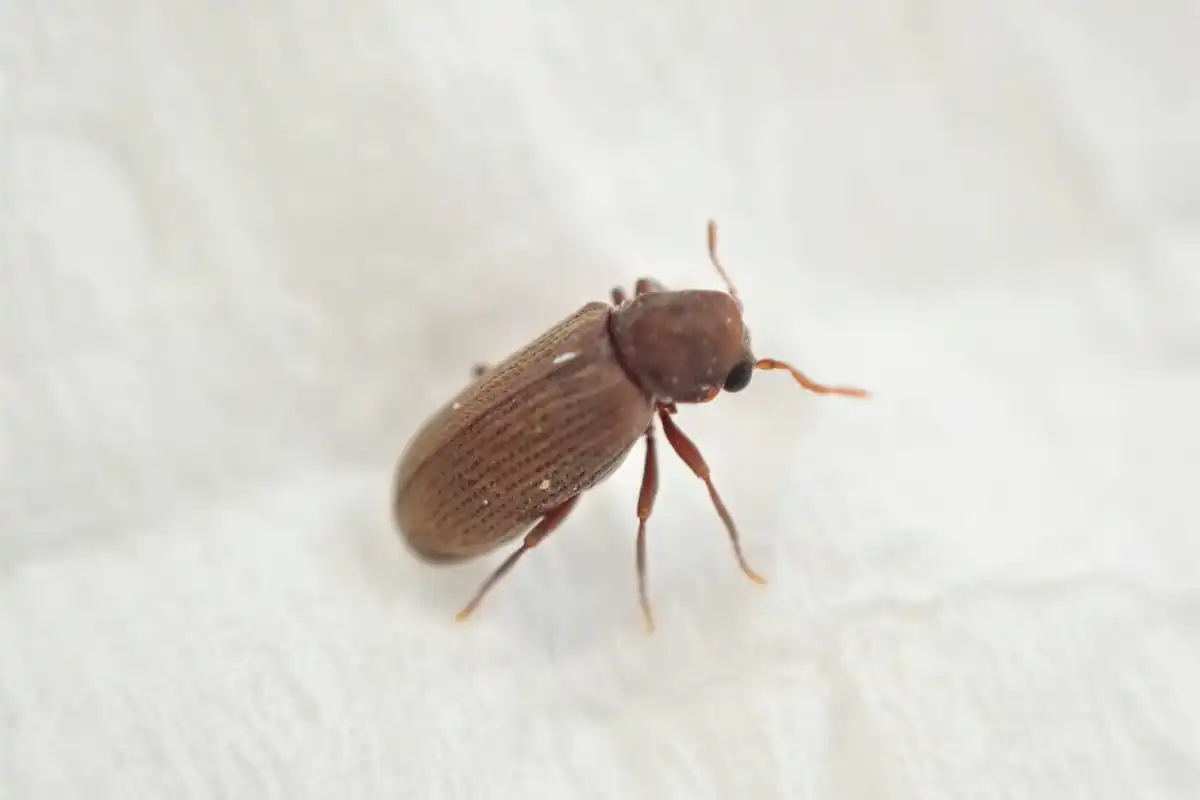
Permethrin is a synthetic pyrethroid insecticide, and it's the active ingredient in most residual borer treatments and flight-hole injectors sold in New Zealand. Brushed or sprayed onto bare timber, it soaks into the outer layer of the wood and stays there, so beetles emerging through it, and young larvae hatching on it, are killed. Used to the label it's a practical home treatment, but it is very toxic to cats and to fish. This page explains how it works and how to use it well. The borer products page compares it with the alternatives.
How does permethrin kill borer?
Permethrin kills borer by attacking the insect's nervous system on contact. In timber it works as a barrier rather than a poison that chases larvae deep inside: it sits in the outer few millimetres of the wood, so a beetle chewing its way out, an adult laying eggs, or a newly hatched larva boring in all meet a lethal dose. Over the three to four years a generation takes, that breaks the cycle.
This is why it only works on bare, unsealed timber, and why it needs to last. A coat that wore off after a season would miss most of the larvae still feeding inside. Our treatment guide shows where the coat goes in a house.
What strengths are sold for borer?
Retail borer products typically sell permethrin in two strengths: a concentrate you dilute, and a ready-to-use liquid at about the diluted strength. One manufacturer's technical sheets list a 10 g/L concentrate, diluted 100 ml per litre of water (or kerosene), a 1.0 g/L ready-to-use spray, and a 1.0 g/L aerosol injector for flight holes. Each lists its own HSNO approval number.
| Product form | Permethrin strength (as listed) | HSNO approval (as listed) | Use |
|---|---|---|---|
| Concentrate | 10 g/L | HSR101164 | Dilute 1:10, brush or spray bare timber |
| Ready to use | 1.0 g/L | HSR101165 | Spray bare timber, smaller jobs |
| Spray injector | 1.0 g/L | HSR000266 | Flight holes in finished timber |
These figures come from the manufacturer's published sheets. Read the label on the pack you buy.
Is permethrin dangerous to cats?
Yes. Cats are far more sensitive to permethrin than people or dogs, because they can't break it down efficiently. Veterinary charities describe permethrin poisoning in cats as an emergency, with twitching, tremors and seizures. Keep cats out of treated areas until the product is completely dry, don't let them lick treated surfaces, and call a vet straight away if a cat is exposed.
Most cat poisonings overseas come from dog flea treatments containing permethrin, but treated timber, wet spray and spills are risks too. Treat the subfloor or roof space while the cat is shut away, keep the access closed until the timber is dry, and clean up drips. Our answer on pets and children covers the rest of the household.
Is permethrin harmful to fish and waterways?
Permethrin is very toxic to fish and other aquatic life, which is why borer products carry warnings about drains and waterways. Never rinse sprayers or pour leftover mix into a sink, drain, gutter or stormwater grate: in Auckland, stormwater runs straight to streams and the harbour. Cover fish tanks and switch off their pumps if you're treating nearby, and keep spray off ponds.
Our answer on disposing of borer treatment covers leftovers and empty containers.
Borer under the floor or in the roof space? Get a written quote
How do you use permethrin safely?
Use permethrin safely by following the label exactly: mix only what you'll use (one concentrate's diluted mix must be used within 48 hours), wear the protective gear it lists, apply only to bare timber, keep children and animals out until it's dry, and never spray it into the air as a mist. In subfloors and roof spaces, a respirator suited to the product, eye protection and coveralls are sensible.
- Work in good ventilation and take breaks in a hot roof space
- Keep it off food surfaces, toys and bedding
- Wash skin straight away if you get it on you
- Store it in the original container, locked away
- For a suspected poisoning, call the National Poisons Centre on 0800 764 766, or 111 in an emergency
How long does a permethrin treatment last?
A permethrin treatment on bare timber is designed to last for years, which is the point: it has to outlast larvae that can spend three to four years inside. One manufacturer notes that timber in strong sunlight may need treating again after about five years, because UV breaks permethrin down. Sheltered subfloor and roof timber keeps its protection longer. Check for new holes each flight season.
Our answer on how long borer treatment lasts goes into re-treatment.
Questions people ask
Is permethrin the same as fly spray?
Fly sprays often contain pyrethroids, sometimes permethrin, but they're made to be sprayed into the air at a low dose for flying insects. They don't soak into timber or leave a lasting layer, so they don't stop borer larvae.
Can I mix permethrin borer concentrate with kerosene?
One manufacturer's directions allow kerosene instead of water as the diluent for the longest protection. Kerosene adds a strong smell that lasts for days and makes the mix flammable, so water is the better choice inside a lived-in house.
Does permethrin stain timber?
Water-based permethrin products are usually clear and don't stain bare timber, but labels advise testing a hidden area first on decorative timber and furniture. Solvent carriers are more likely to affect finishes.
How shop products compare with a professional job is covered at borer treatment across Auckland.