Huhu beetles and grubs: identify them, then find the damp
New Zealand's biggest beetle looks alarming at the window on a summer night. In a house, it's mostly a messenger about moisture.
Facts and prices checked 8 November 2026
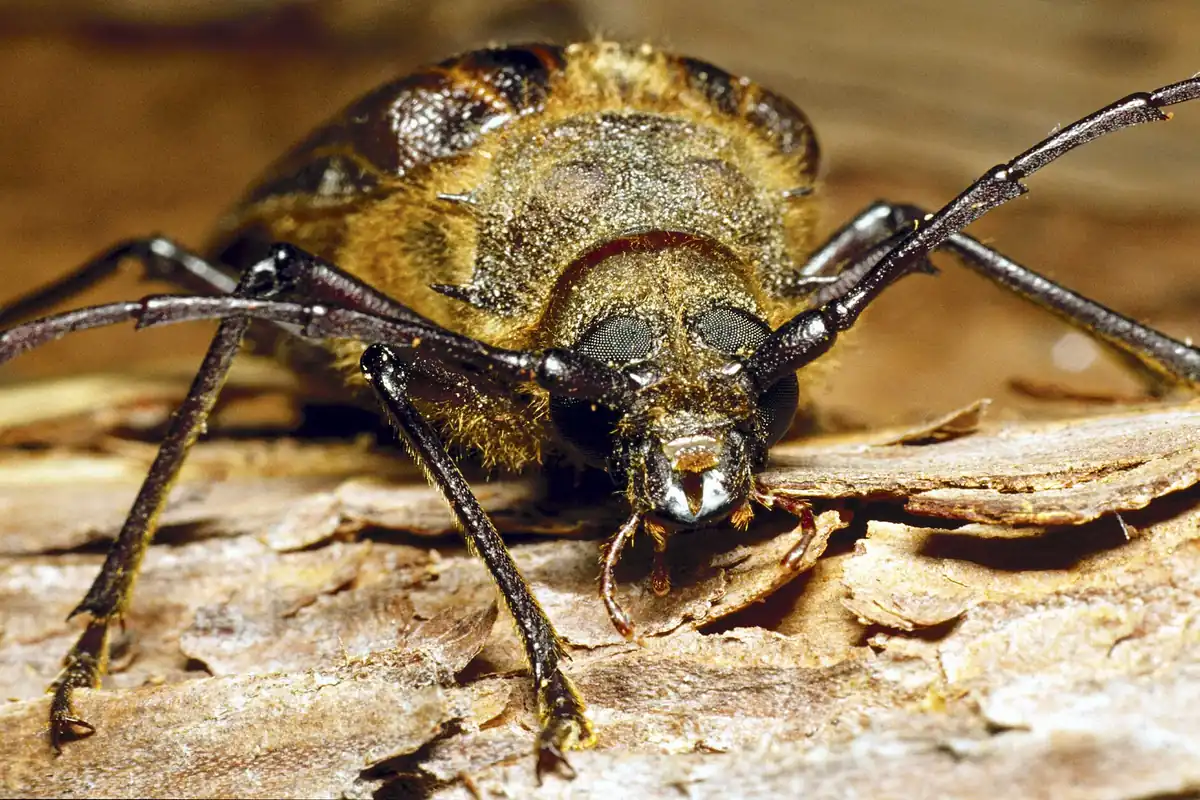
The huhu beetle (Prionoplus reticularis) is New Zealand's largest beetle: adults reach about 50 mm, and its fat white grubs grow to 50 to 70 mm. The grubs feed in dead and rotting wood. In a house, huhu only take hold in timber that is damp, so finding huhu grubs or their large oval exit holes in framing almost always points to a leak, a wet subfloor or rot. Treatment starts with finding and fixing the moisture. This page covers identification and what to do. For the smaller borers, see the borer beetle guide.
What does a huhu beetle look like?
A huhu beetle is a large, long-bodied brown beetle, up to about 50 mm long, with long antennae and a pattern of fine veins on its wing covers. It's clumsy in flight and often crashes into lit windows on warm summer nights. It looks nothing like the common house borer, which is only 2.5 to 5 mm long. Adults have strong jaws and can nip if handled.
| Feature | Huhu | Common house borer |
|---|---|---|
| Adult length | Up to about 50 mm | 2.5 to 5 mm |
| Larva | Fat white grub, 50 to 70 mm | Small C-shaped grub, up to about 7 mm |
| Exit hole | Oval, about 10 to 20 mm | Round, about 1 to 2 mm |
| Timber | Damp or rotting wood | Dry or damp sapwood |
| Adults about | November to early March | Mainly November to January |
What does a huhu grub look like?
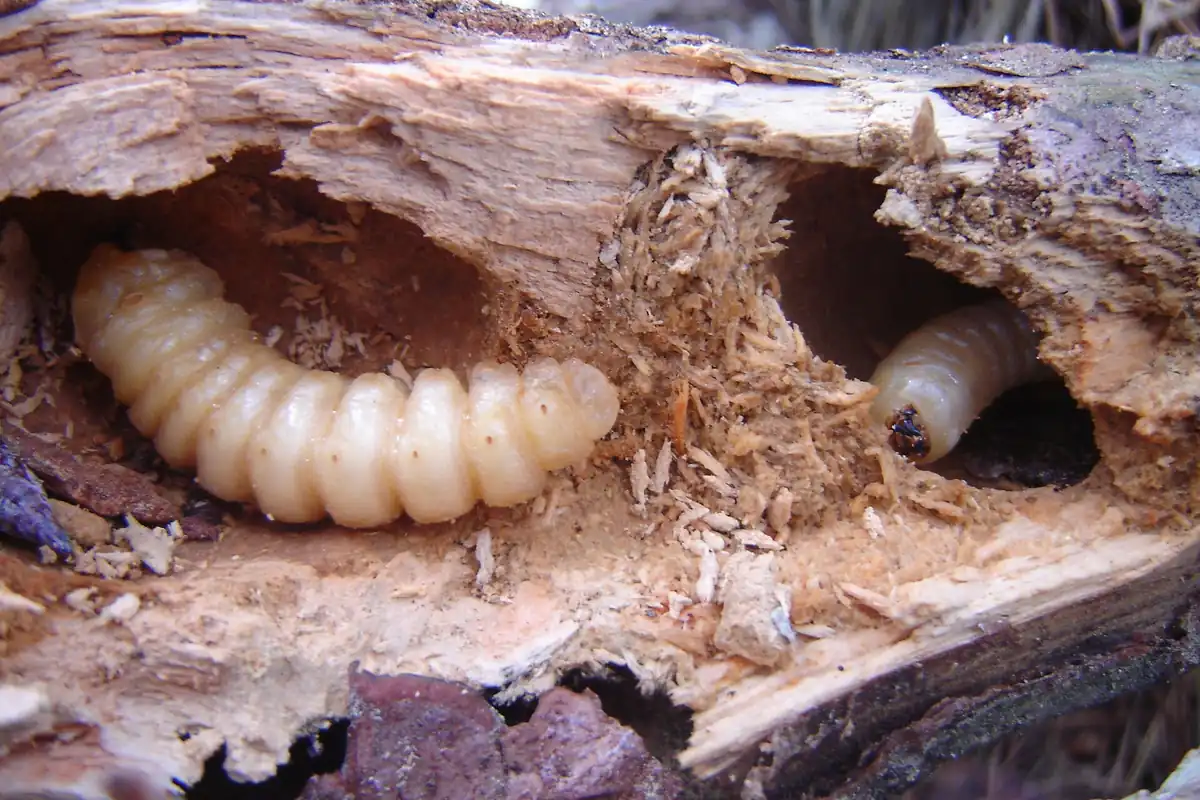
A huhu grub is a large, soft, cream-white larva with a brown head and strong jaws, growing to about 50 to 70 mm long. It lives in tunnels packed with coarse, fibrous frass in dead logs, stumps, fence posts and damp building timber. Grubs typically spend two to three years in the wood before pupating; the huhu grub life cycle walks through each stage. You usually find them when splitting firewood or pulling out rotten timber.
Huhu grubs were a traditional Māori food, and Te Ara notes they're a favourite of the kākā. That's a piece of natural history, not a reason to taste ones from treated or painted building timber.
Why do huhu in a house mean damp?
Huhu in a house mean damp because newly hatched larvae need moist wood to establish. Older larvae can carry on in seasoned timber only while its moisture content stays at or above about 25%. Dry, sound framing in a well-ventilated house isn't a huhu host. When huhu turn up in framing, joists or piles, there's usually a leak, a wet subfloor, poor drainage or rot nearby.
Places huhu show up around Auckland houses:
- Rotten piles and bearers over wet ground
- Framing behind a leaking shower or window
- Deck joists, steps and verandah timber in contact with soil
- Old fence posts and retaining-wall timber
- Firewood stacked against the house
What should you do about huhu?
Deal with huhu by fixing the moisture, removing the rotten timber the grubs live in, and replacing it with treated timber. Spraying the surface of rotting wood won't save it. Once the timber is dry and sound, a residual borer treatment on surrounding bare framing protects it from the smaller borers, which often share the same damp subfloor. Get soft or crumbling structural timber looked at by a builder.
Borer under the floor or in the roof space? Get a written quote
- Find the water. Check plumbing, cladding, flashings, gutters, downpipes and subfloor drainage.
- Remove the rot. Rotten, huhu-riddled timber has lost its strength.
- Replace like for like with treated timber, within the Building Act's limits for repairs.
- Treat the surrounding bare timber if common borer is also active.
- Dry the subfloor with a ground moisture barrier and clear vents.
Our prevention guide and subfloor treatment page cover steps 4 and 5.
When do huhu beetles fly?
Huhu adults emerge from November to early March, with the peak from mid-December to late February. That's why they turn up at lit windows and outdoor lights on warm summer evenings. Seeing one at the window doesn't mean your house is infested: adults fly in from bush, firewood and old stumps nearby. Large oval holes in your own timber are what matter.
The treatment timing guide lines the huhu season up with the common borer's.
Can huhu attack treated timber?
Huhu rarely trouble sound treated timber, but NZFFA notes they may begin boring into preservative-treated wood, and wet treated timber can lose some of its protection. The rule for any timber is the same: keep it dry. Treated timber that stays wet for long periods is at risk from rot, and rot is what huhu follow. See can borer get into treated timber.
Questions people ask
Are huhu beetles dangerous?
No. They're harmless to people, though their jaws can give a sharp nip if you pick one up. The damage they do to damp timber is the real issue, and it's a sign of a moisture problem.
Should I kill huhu beetles at the window?
There's little point. Adults at lights have usually flown in from outside and don't feed in houses. Put them outside and check your own timber for large oval holes and damp instead.
Is huhu frass different from borer dust?
Yes. Huhu tunnels are packed with coarse, fibrous frass, nothing like the fine gritty dust that trickles out of common borer holes. The scale of the tunnels gives it away too.
Once you know the beetle, borer treatment across Auckland explains the treatment that fits it.