How to tell if borer is still active
Plenty of old houses carry holes from borer that died out decades ago. These checks tell you whether yours is still eating.
Facts and prices checked 5 November 2026
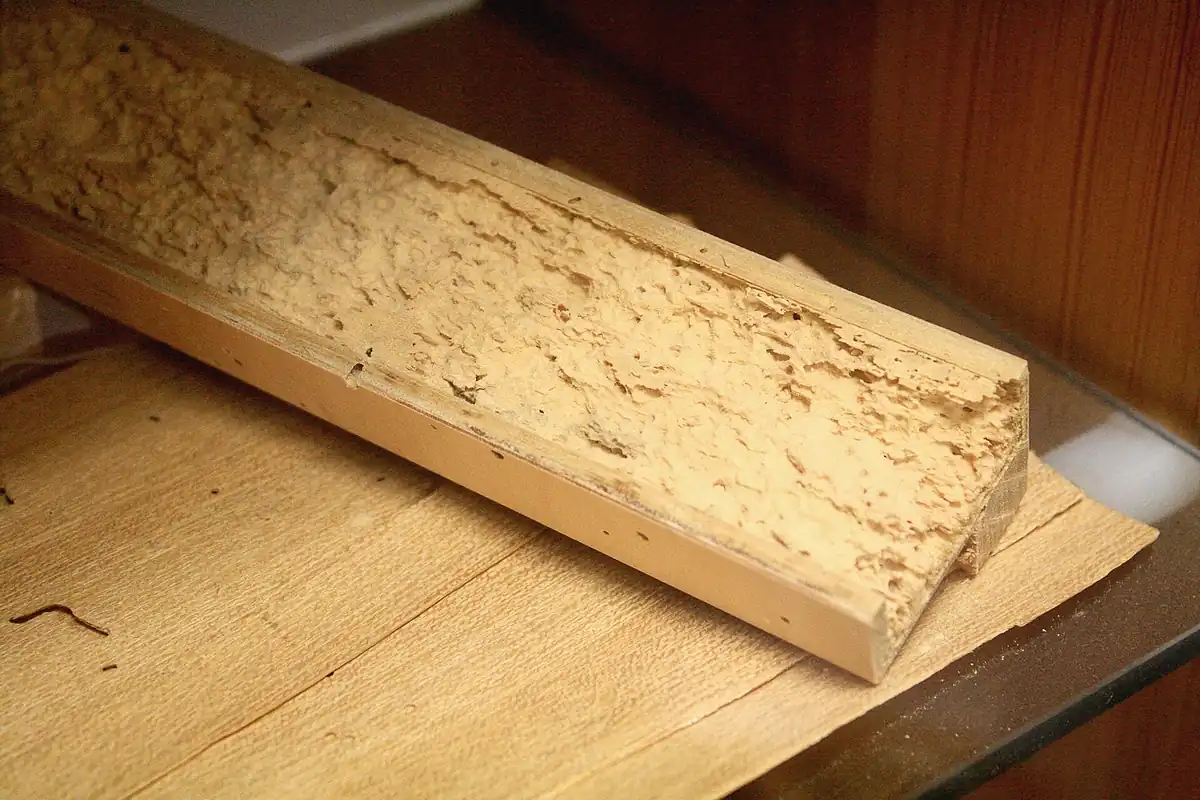
Borer is active if you find fresh exit holes with pale, clean insides and sharp edges, fine gritty dust that reappears under the holes after you've cleaned it up, or small brown beetles near windows between about November and January. Old, inactive borer leaves dark, rounded, dusty holes and no new dust from season to season. The surest test is simple: clean the area, put dark paper underneath, and look again during the flight season. This answer walks through five checks. It supports our guide to borer holes.
What do fresh borer holes look like?
Fresh common borer holes are round, about 1 to 2 mm across, with crisp edges and clean, pale timber showing inside. Old holes darken as the exposed wood ages and collects dirt, and their edges get worn or painted over. In a painted surface, a fresh hole breaks through the paint cleanly, while old holes are often filled with dust or partly paint-sealed from later coats.
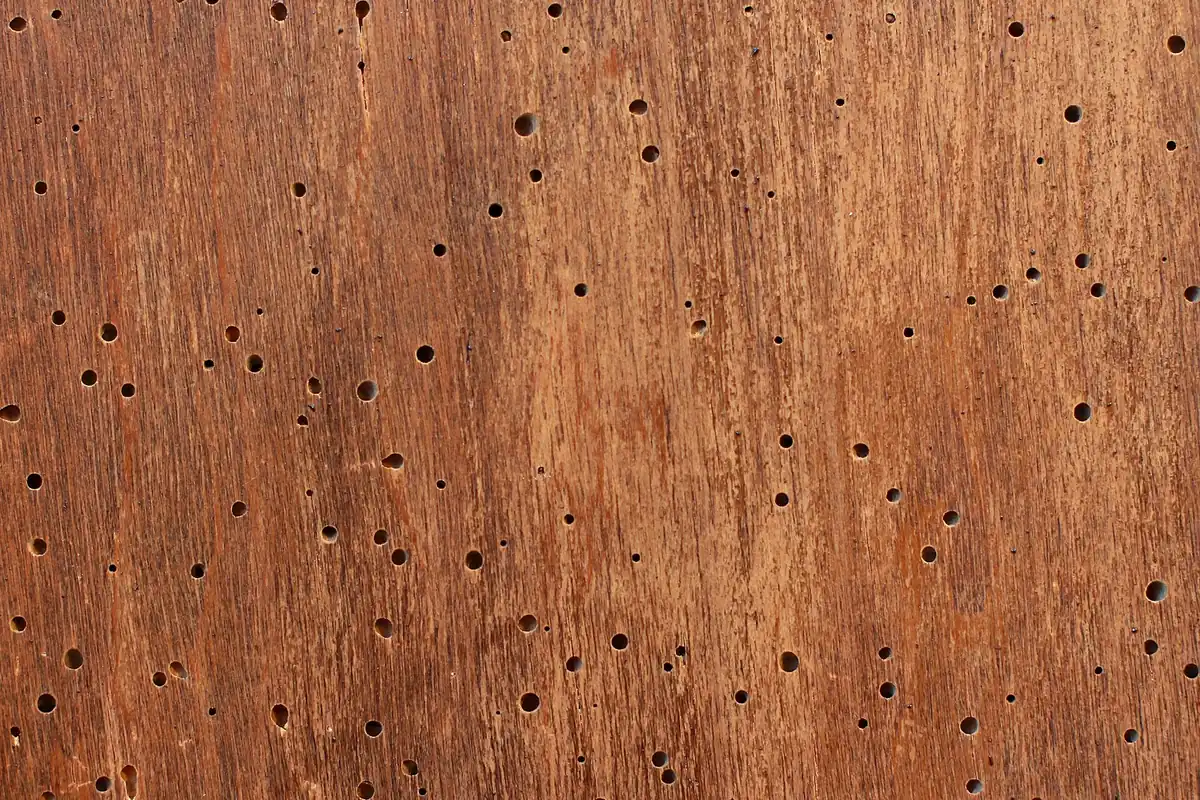
Look at the holes in good side light with a torch. A cluster of pale holes among older dark ones means the borer is still going in that piece of timber.
Does new dust mean live borer?
New dust usually means live borer. As beetles chew out, and as vibration dislodges frass, fine gritty dust trickles from the holes and builds up underneath. NZFFA describes common borer frass as loosely packed and granular, gritty to the touch. If you vacuum it away and more appears in the following weeks, something is emerging from that timber.
The paper test, step by step:
- Vacuum the holes and the surface under them.
- Lay dark paper or tape under the area, or mark the cleaned floor with a pencil.
- Leave it for two to four weeks in the flight season.
- Check for new dust under specific holes.
Our answer on borer dust and frass shows how to tell borer dust from other debris.
When is the best time to check?
The best time to check is the height of the flight season, roughly December to February, when common borer beetles are emerging and new holes and dust are easiest to catch. A check in winter can still find pale holes, but the dust test works best in summer. For two-toothed longhorn, check in autumn, when its adults emerge.
Borer under the floor or in the roof space? Get a written quote
A one-off look in July can make active borer seem dead, and a heap of old dust under a sideboard can make dead borer look alive, so time your check to the season. The timing guide has a simple yearly routine.
Do beetles at the window mean an infestation?
Beetles at the window in summer usually mean borer is emerging somewhere in or under the house. Common house borer beetles are small, 2.5 to 5 mm, reddish to blackish brown, with the head tucked under a hood. They're drawn to light after emerging. A few each summer means active borer nearby; finding where they came from is the next step.
Compare what you find with the photos on our borer beetle page. A very large brown beetle at a lit window at night is more likely a huhu, which has a different meaning.
Where should you look first?
Look first where borer is most likely: the subfloor (joists, bearers, board undersides), the roof space (rafters, ceiling joists, sarking), then floors, skirtings, window joinery and old furniture. Borer that shows up indoors usually has a bigger presence in those hidden bare timbers. A torch, a phone camera and a screwdriver to test softness are all you need.
- Subfloor: dust on piles, the ground sheet or the tops of bearers
- Roof space: dust on insulation or ceiling linings under rafters
- Floors: dust lines along board edges and in corners
- Furniture: dust under drawers and on the floor beneath
If you find active borer in more than one area, the subfloor treatment page explains what a treatment involves.
Questions people ask
Can borer be active with no new holes?
Yes, for a while. Larvae feed inside for three to four years, so a piece can hold live larvae well before any new holes appear. That's why borer in nearby timber matters, and why checks need repeating each season.
Should I fill holes to see if new ones appear?
You can fill or wax a small patch of holes as a test, then look for new holes through it next summer. Don't fill everything until you're confident, or you'll hide the evidence.
Is a soft floorboard a sign of active borer?
It's a sign of damage, which may be old or current. Check nearby holes and dust to judge activity, and have soft or springy boards looked at, because damp and rot can be involved too.
Short answers like this one feed into treating borer in Auckland homes, which sets out every option from DIY to a professional visit.