Borer dust: reading the frass
That little pile of powder under a hole is the most useful clue you'll get. Its texture tells you which insect, and its freshness tells you when.
Facts and prices checked 5 November 2026
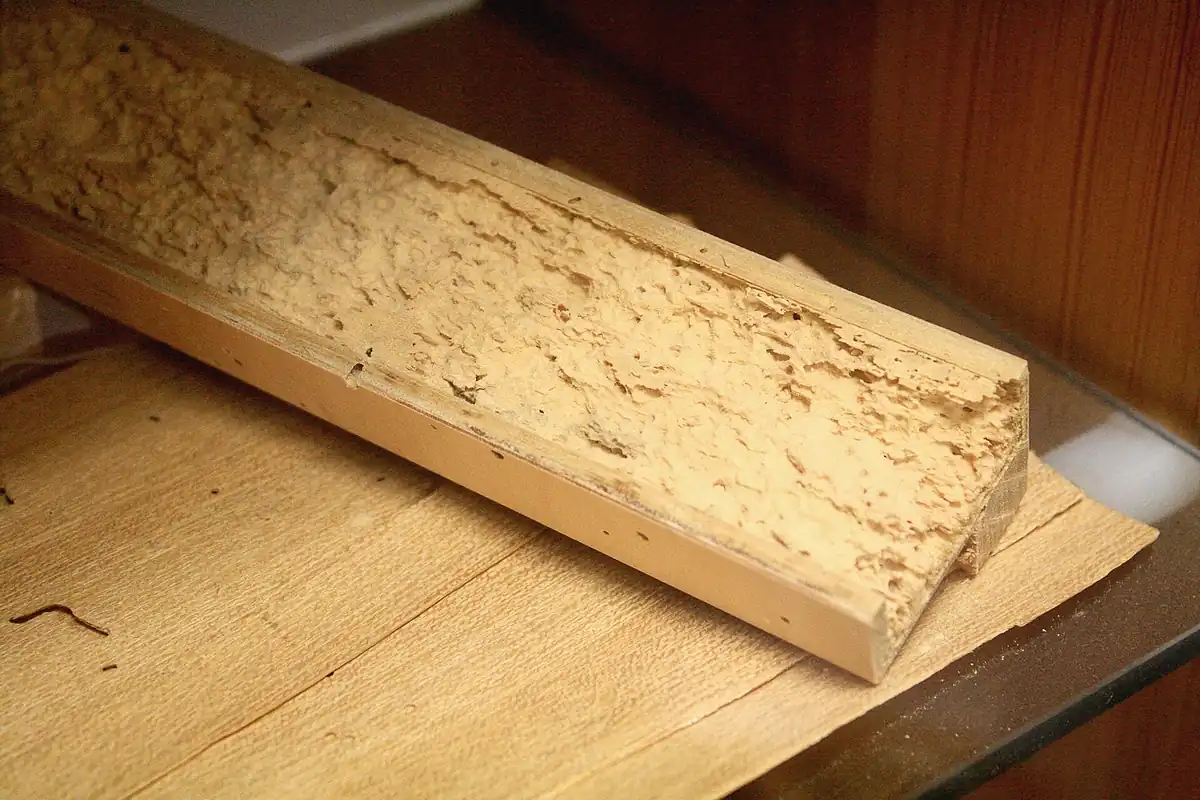
Borer dust, or frass, is the chewed wood and droppings that borer larvae pack into their tunnels. Common house borer frass is loosely packed and granular, with a gritty feel between your fingers, and it trickles out of the round 1 to 2 mm exit holes when beetles emerge or the timber is knocked. Fresh dust that comes back after you clean it up means live borer. Very fine, talc-like powder points to powderpost beetle in hardwood, and hard, millimetre-long pellets are a reason to think about termites. This answer helps you read what you find. It sits under our borer holes guide.
What does common borer dust look like?
Common borer dust is fine, pale and gritty, a bit like coarse flour mixed with tiny grains. NZFFA describes it as loosely packed and granular, gritty to the touch. It collects in small cones under holes in floors and furniture, along the tops of bearers in the subfloor, and on insulation or ceiling linings under roof timber.
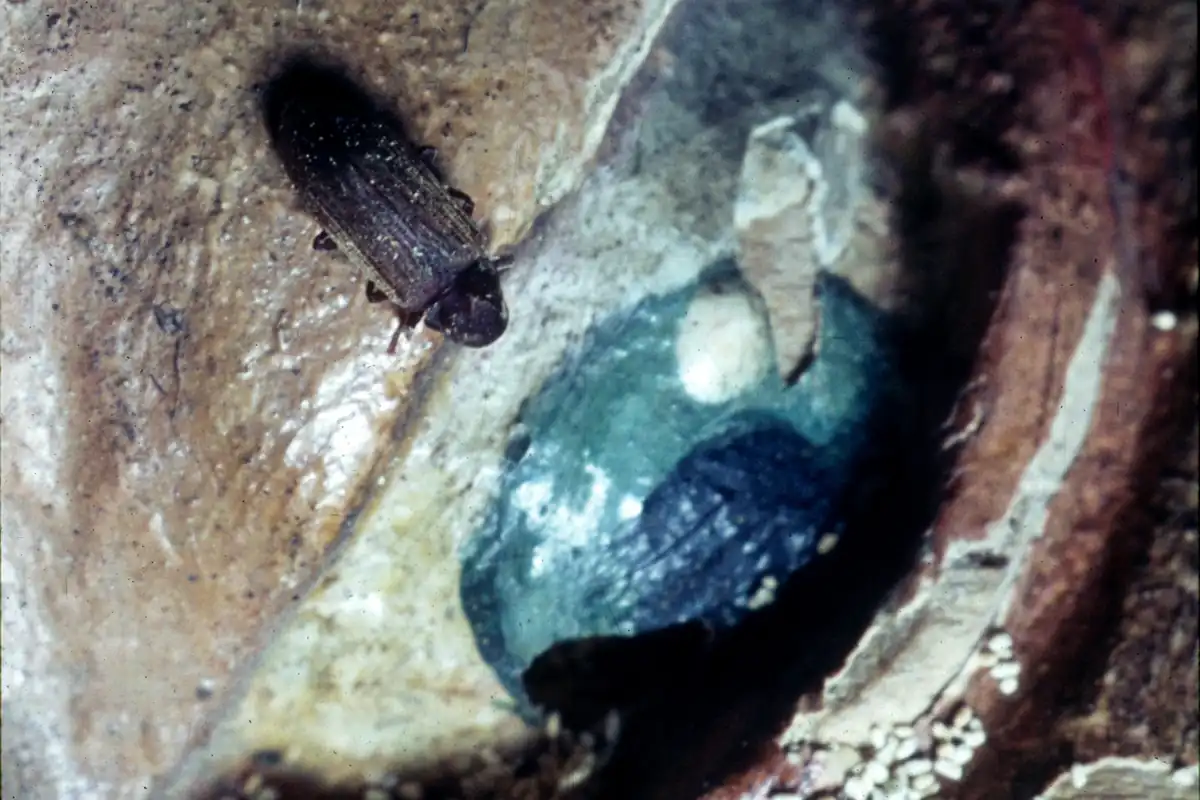
Its colour follows the timber: pale under fresh pine or kahikatea, a little darker under rimu. Fresh dust looks clean and loose; old dust is dull, compacted and often mixed with ordinary household dust and cobwebs.
How do different insects' dust compare?
Different wood-borers leave different debris, which makes it a quick identification guide. Powderpost beetle leaves a very fine powder like talcum, loosely packed in its tunnels. Huhu tunnels are full of coarse, fibrous frass. Drywood termites leave piles of hard, millimetre-long pellets. Rot leaves no frass at all, just soft, crumbly or stringy timber.
| Debris | Texture | Likely cause | What to do |
|---|---|---|---|
| Gritty, granular, pale dust in small cones | Coarse flour | Common or native house borer | Check if fresh; treat bare timber, inject finished timber |
| Very fine, smooth powder | Talc | Powderpost beetle in hardwood (tawa, oak) | Treat as for borer; hardwood sapwood only |
| Coarse, fibrous shavings in big tunnels | Like sawdust | Huhu in damp wood | Find the damp, replace rotten timber |
| Hard pellets about 1 mm, piled below tiny holes | Like poppy seeds | Possible drywood termites | Photograph and call MPI on 0800 80 99 66 |
| No frass, soft or stringy timber | None | Rot | Fix moisture, replace timber |
Where does borer dust collect?
Borer dust collects directly beneath the holes it falls from, so it shows you where the activity is. Look along skirting tops, in floor corners and gaps between boards, under furniture and drawers, on subfloor ground sheets, and on ceiling insulation. In a roof space, small heaps on the top of the ceiling linings often sit under rafters with borer.
Borer under the floor or in the roof space? Get a written quote
A vacuum and a torch are the best tools. Clean an area completely, then check it over the next few weeks. Our answer on how to tell if borer is active covers the paper test.
Does fresh dust always mean live borer?
Fresh dust usually means live borer, but not always. Vibration from footsteps, doors or building work can shake old frass out of old tunnels, and a heap that built up under a cupboard over years can look recent. The reliable sign is dust that comes back under specific holes after you've cleaned it away, especially between November and February when beetles emerge.
If dust returns after a treatment, give it a season. Beetles already close to emerging may still chew out through treated timber, but the next generation shouldn't establish.
What should you do after finding dust?
After finding dust, identify it, confirm whether it's fresh, and find its source. Then match the response to the insect: residual treatment of bare timber and injection of finished timber for common borer, moisture repairs for huhu, a report to MPI for anything termite-like. Don't fill holes or repaint until you're sure the activity has stopped.
The subfloor treatment page explains what a treatment visit covers, and the borer vs termites page explains the termite signs in more detail.
Questions people ask
Is borer dust harmful to breathe?
Borer frass is mostly wood. Like any fine wood dust, it's better not to breathe it in quantity, so use a vacuum rather than sweeping, and wear a dust mask in a dusty subfloor or roof space.
Why is there borer dust but no holes?
Dust can fall from holes you can't see, such as on the underside of a board, behind a skirting or high in the framing. Look directly above where the dust is collecting.
Should I vacuum borer dust before treatment?
Yes. Vacuuming removes the old dust so new dust after treatment is easy to spot. It also helps a surface treatment soak into the timber rather than into a layer of dust.
Short answers like this one feed into treating borer in Auckland homes, which sets out every option from DIY to a professional visit.