Borer or termites? How to tell, and who to call
Almost everything that eats timber in an Auckland house is borer. Exotic termites are rare here, but they're a biosecurity matter, so it pays to know the difference.
Facts and prices checked 5 November 2026
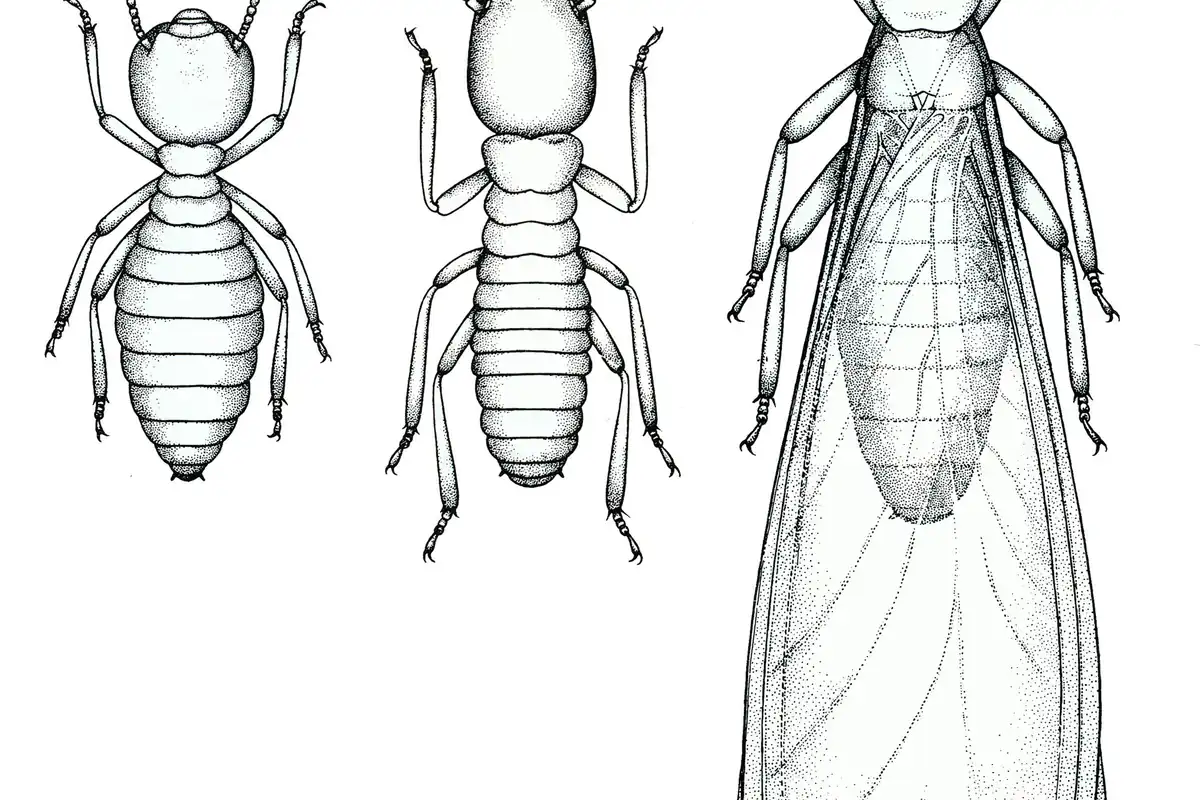
Borer leaves small round exit holes and gritty dust; termites leave no exit holes, and their signs are tiny piles of pellets, shed wings or earthy mud tubes. In Auckland, borer is by far the more likely culprit. Exotic termites are classed by the Ministry for Primary Industries (MPI) as an unwanted pest, and in 2021 Australian subterranean termites were found in some Auckland houses. If you suspect termites, photograph what you see and call MPI on 0800 80 99 66 instead of treating it yourself. This page shows the differences. For borer itself, see the borer beetle guide.
How do you tell borer damage from termite damage?
You tell them apart by the holes and the debris. Borer leaves round exit holes about 1 to 2 mm across with gritty dust below them. Termites don't chew exit holes to leave timber; drywood termites push out small, hard, millimetre-long pellets, and subterranean termites build earthy mud tubes and line their galleries with soil. Shed wings near windows also point to termites.
| Sign | Borer | Exotic termites |
|---|---|---|
| Holes in the surface | Round exit holes, 1 to 2 mm (common borer) | Usually none; tiny kick-out holes at most |
| Debris | Fine gritty dust from holes | Pellets about 1 mm long piled below tiny holes, or soil |
| Mud tubes | Never | Subterranean species build them |
| Wings | No | Discarded wings after swarming |
| Insects seen | Small brown beetles, November to January | Pale, soft-bodied insects; winged swarmers |
| Timber affected | Untreated sapwood mainly | Treated and untreated timber, hardwoods and softwoods |
Are there termites in Auckland?
Yes, but exotic termites are rare and watched closely. New Zealand has three native termite species, which aren't considered destructive to houses. Exotic species have been found from time to time, most often on boats. In 2021 Australian subterranean termites (Coptotermes acinaciformis) were found in some Auckland houses; MPI treated the houses and continues to monitor them.
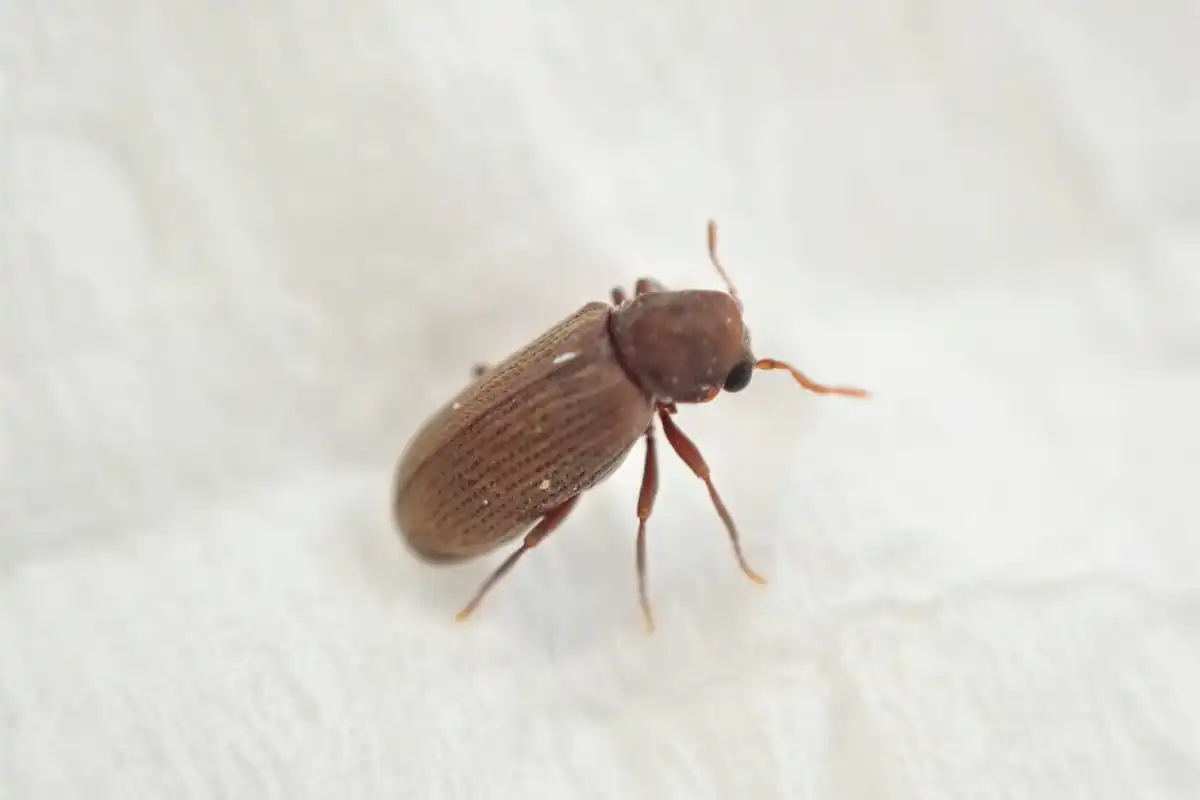
That history is why any suspected termite activity in a house is worth reporting. MPI notes that exotic termites will eat treated timber as well as untreated hardwood and softwood, which borer generally doesn't.
What should you do if you suspect termites?
If you suspect termites, take clear photos of the insects, pellets, wings or mud tubes, note where you found them, and report them to MPI on 0800 80 99 66 or through its online form. Leave the timber as it is until MPI responds, rather than spraying or pulling it apart, so what's there can be properly identified.
- Photograph insects, debris and damage, with a coin for scale.
- Collect a few insects in a sealed jar if you can do so easily.
- Report to MPI's exotic pest and disease hotline: 0800 80 99 66.
- Don't treat it as borer until termites have been ruled out.
Borer under the floor or in the roof space? Get a written quote
Why does termite treatment differ from borer treatment?
Termite treatment differs because termites live in colonies that forage beyond the timber they eat, so treating the surface of a board doesn't reach the colony. Exotic termites in New Zealand are handled through MPI's biosecurity response. Borer, by contrast, lives in the timber it eats and is controlled with residual surface treatments, injection and drier conditions, which homeowners and pest technicians do every day.
A borer treatment visit doesn't deal with termites: if anything during a visit looks like termite activity, the advice is to stop and report it. Our how to treat borer guide covers the borer side.
What else gets mistaken for termites?
Several harmless or less serious insects get mistaken for termites. Flying ants swarm in summer and have wings, but they have narrow waists and bent antennae. Powderpost beetle leaves talc-fine powder in hardwood. Huhu grubs are large and white and live in damp, rotting timber. Even common borer dust, when it builds up under old furniture, can look like pellets at a glance.
- Flying ants: pinched waist, elbowed antennae, front wings longer than back wings
- Powderpost beetle: very fine flour-like dust, hardwoods such as tawa or oak
- Huhu: big oval holes and fibrous frass in damp timber; see the huhu beetle page
- Common borer: round holes and gritty dust; see borer dust and frass
Does house insurance treat termites differently?
Insurance wording varies, and many policies exclude gradual damage from insects. Termites and borer may be treated the same way or differently depending on the insurer. Read your own policy or ask your insurer, and keep records of any report to MPI. Our answer on borer and house insurance explains what to look for in the wording.
Questions people ask
Can termites live in treated timber?
MPI says exotic termites will eat treated timber as well as hardwood and softwood. That's one of the main differences from common house borer, which mostly attacks untreated sapwood.
Are native New Zealand termites a problem?
New Zealand's three native termite species aren't considered destructive to houses. They usually live in damp, rotting wood outdoors. Report anything unusual in a house to MPI rather than guessing.
Is reporting termites to MPI free?
Reporting a suspected exotic pest to MPI's hotline costs nothing, and it's how biosecurity responses start. Have your photos and address ready when you call.
Once you know the beetle, the Borer Wise guide to Auckland borer explains the treatment that fits it.