Subfloor borer treatment: piles, bearers and joists
Most borer in an older Auckland house lives under the floor. This is how that timber gets treated, and what decides the price.
Facts and prices checked 5 November 2026
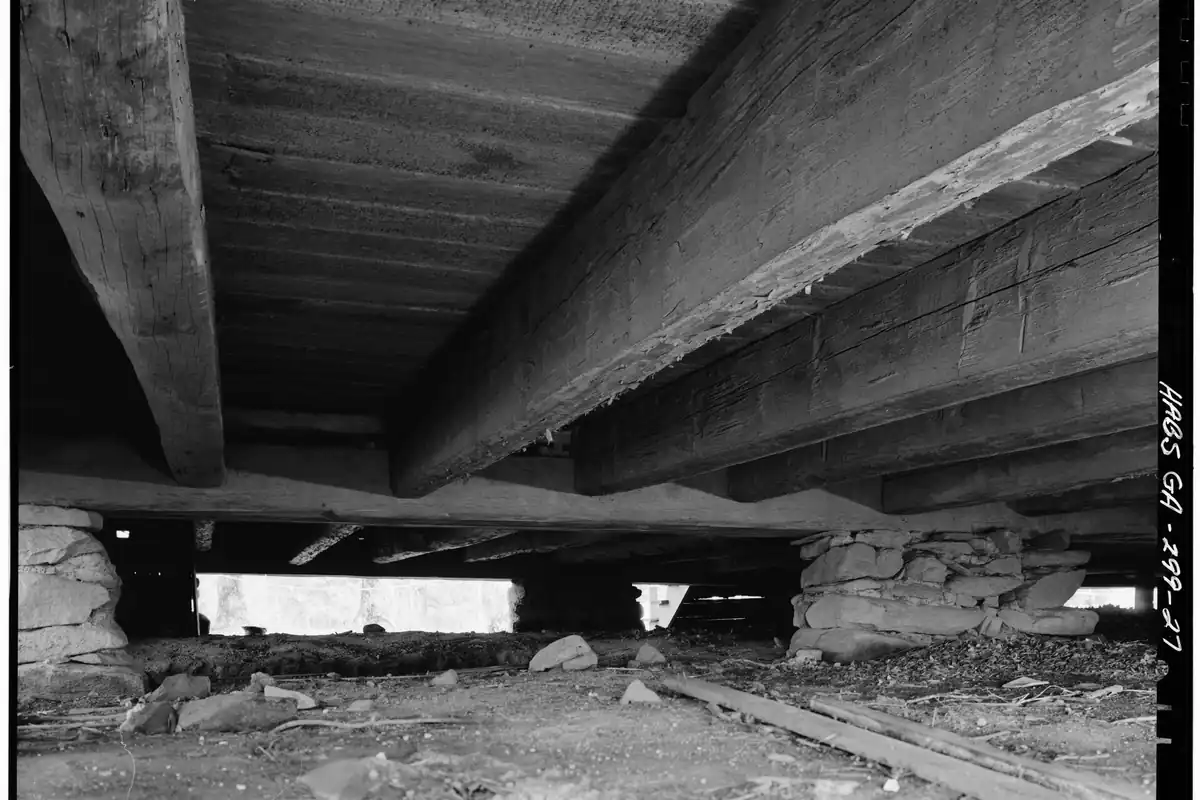
Subfloor borer treatment means coating the bare timber under your house (piles, bearers, joists and the underside of the floorboards) with a residual insecticide that stays in the outer layer of the wood for years. Every beetle that emerges, and every egg laid on that timber, meets it. It's the core of most borer jobs on older Auckland homes, because the subfloor is dark, bare, a little damp and rarely disturbed. For the full sequence, see how to treat borer; for the roof, see roof space treatment.
Why does borer concentrate under the floor?
Borer concentrates under the floor because the timber there is exactly what the common house borer wants: unpainted sapwood, humid air and no disturbance. The larvae grow fastest in timber kept above about 70% relative humidity, and an enclosed subfloor over damp ground often sits there for months. In a house built before treated framing became standard, the joists and bearers are usually untreated native timber or early pine.
The result is that a few holes in a hallway floor often mean a lot more activity on the hidden underside of the same boards. A subfloor treatment works on that hidden face, which is where most eggs are laid.
What does a technician actually do in the subfloor?
A technician checks how far the borer goes, then sprays or brushes a residual borer treatment onto every reachable bare surface: pile tops, bearers, joists, blocking and the undersides of the boards. Most labels ask for a liberal first coat and a second once the first has soaked in. Flight holes in finished timber upstairs are injected separately if they show activity.
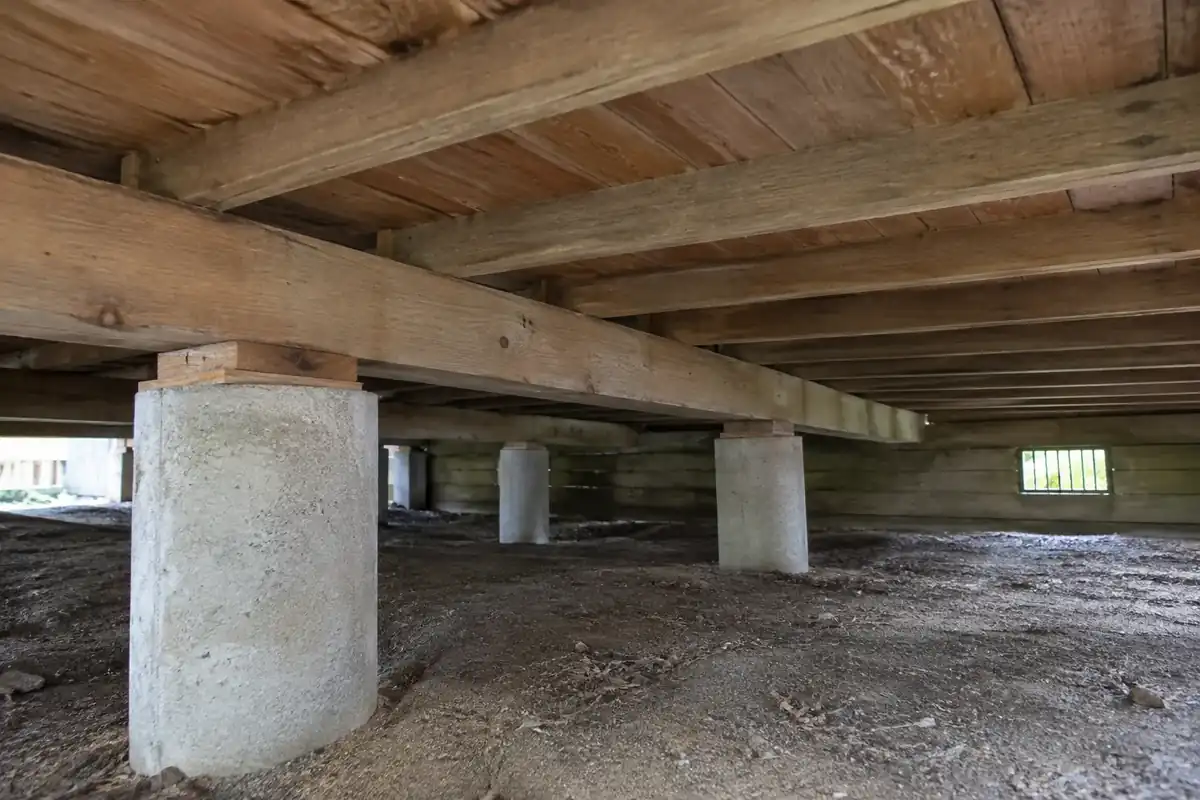
A typical visit runs in this order:
- Look first. Fresh pale holes, frass on the ground sheet or piles, soft timber, damp patches and old repairs are noted. You get a written quote before anything is treated.
- Clear the way. Stored items, loose timber and rubbish near the access are moved, because they block spray and often carry borer themselves.
- Treat the timber. Coarse low-pressure spray reaches the framing; brush work covers places a spray can't.
- Note what isn't treatment. Rotten or badly weakened members are pointed out as building work, priced separately by a builder.
What makes a subfloor hard to treat?
Clearance is the biggest factor. A subfloor you can crouch in is quick; one with 300 mm between ground and joists means crawling on your back with a sprayer. Underfloor insulation, ducting, plumbing, wiring and a ground moisture barrier all have to be worked around without damage. Damp ground, sharp rock and old debris slow the work too.
| Subfloor condition | Effect on the job |
|---|---|
| Walk-in or crouch height | Faster, cheaper, easiest to reach every surface |
| Under about 400 mm clearance | Slow crawling work; some areas need a long wand |
| Polystyrene or blanket underfloor insulation | Treatment goes on before the insulation, or around its edges |
| Wet ground, no moisture barrier | Damp feeds borer; fix it alongside treatment |
| Several levels or sloping site | More area to cover; often more than one access point |
Can you treat your own subfloor?
You can treat a roomy, dry subfloor yourself with a retail borer product, a pump sprayer and proper protective gear. It gets much harder in a low or tight subfloor: two coats over every surface use more product than expected, the mist settles on you, and lying in a confined space with an insecticide is genuinely unpleasant. Many people treat the easy end and get the rest done.
Borer under the floor or in the roof space? Get a written quote
If you go DIY, read the label before you buy, wear a respirator suited to the product plus eye protection and coveralls, and keep children and pets well clear. Our DIY cost guide works out how much product a subfloor takes, and the product safety notice covers the precautions.
What does subfloor borer treatment cost?
Published Auckland price lists put a subfloor borer treatment at roughly $450 to $750, more for large, low or awkward subfloors. Doing the subfloor and roof space together usually lands around $800 to $1,350. Some businesses advertise "from" prices around $210 to $375 plus GST for both areas on small houses. Your price is set in writing after the subfloor has been seen.
The main things that move the price are floor area, clearance, insulation, how many places show live borer and whether finished timber upstairs needs injecting too. The borer treatment cost page puts these figures alongside DIY shelf prices.
Does fixing damp matter as much as the spray?
Fixing damp matters about as much as the spray, because damp timber is what lets borer thrive and what draws in huhu and rot. A residual treatment protects the surface; a dry subfloor slows any survivors down. A polythene ground cover, clear vents, sound downpipes and no garden beds banked against the base boards all help keep the timber drier.
For rentals, the Healthy Homes standards require a ground moisture barrier under suspended floors with an enclosed subfloor, where it's reasonably practicable to install one. Our landlord guide covers that, and the prevention guide covers ventilation and drainage for any house.
Will a fogger under the house do the same job?
A fogger under the house does not do the same job. A fogger's mist only kills adult beetles flying at that moment, during the flight season from about October to March. It leaves nothing on the timber that stops larvae, which live inside the wood for three to four years. A residual surface treatment is what lasts. Our answer on whether borer foggers work explains where a fogger still has a use.
Questions people ask
How long does a subfloor borer treatment take?
Most single-level subfloors take a few hours, depending on clearance, size and how much has to be worked around. A low, insulated or multi-level subfloor can take most of a day. The technician will tell you the expected time with the written quote.
Do I need to be home for subfloor treatment?
Someone usually needs to be there to open access and talk through what was found, but you don't normally need to leave the house for a subfloor treatment. Keep children and pets out of the subfloor and away from the access until the product is dry, as the label directs.
Should the subfloor be treated before or after insulation goes in?
Before, wherever you can. Once underfloor insulation is fitted, the joist sides and board undersides it covers are hard to reach. If you're planning insulation or a moisture barrier, have the borer treated first.
How do I know the subfloor treatment worked?
Watch for new holes and fresh dust in the next flight season or two. Some beetles that were already pupating may still emerge soon after treatment, but they meet treated timber and new eggs fail. Fresh activity a year or two later is worth a call.
Where this method sits among the others is laid out on our main page for borer treatment in Auckland.