Borer larvae: the stage that does the damage
The beetle is what you see, but the grub is what eats your house. It spends years out of sight, which is why treatment works the way it does.
Facts and prices checked 8 November 2026
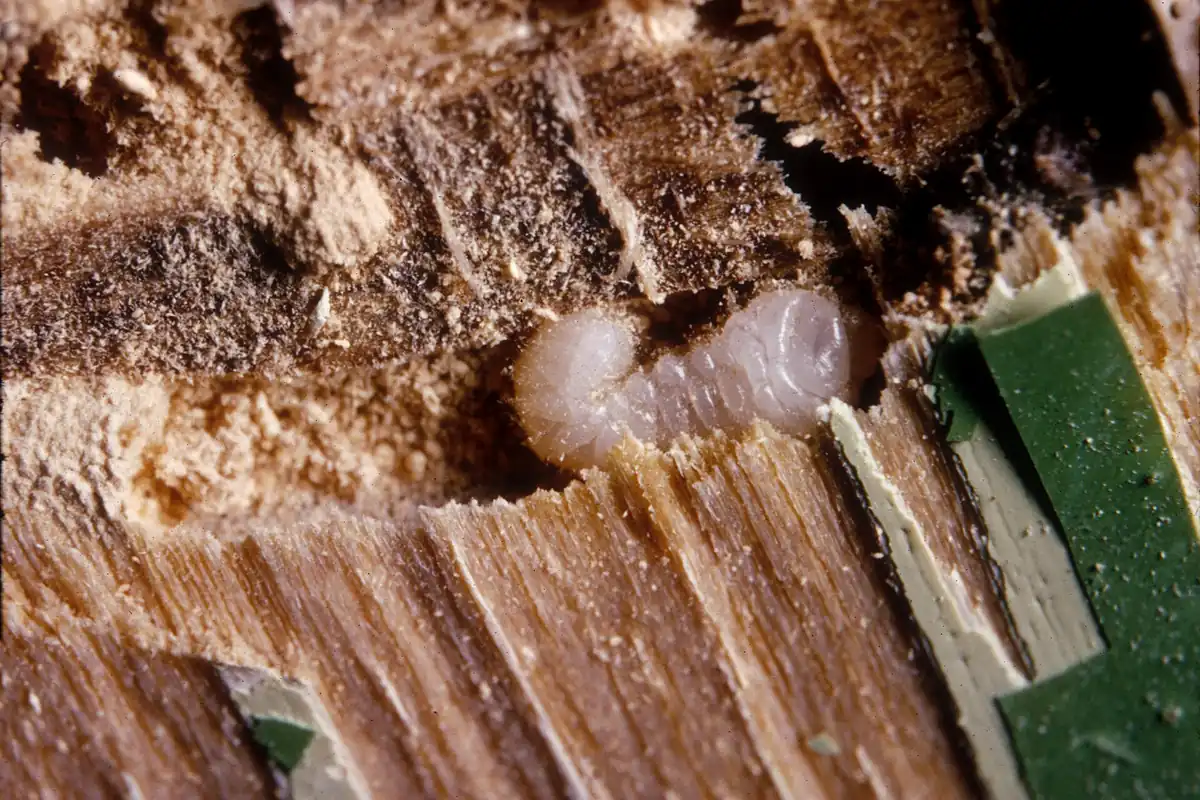
Borer larvae are the grubs of wood-boring beetles, and they do all the eating. A common house borer larva is small, up to about 7 mm long, creamy-white and curled into a C, with a yellow-brown head and dark jaws. It hatches from an egg laid on bare timber, tunnels inside for three to four years, then pupates and leaves as a beetle through a round hole. Because it lives out of sight the whole time, treatments are built to catch it at the surface. This page explains the grub and why that matters. The adults are on the borer beetle page.
What does a borer larva look like?
A common house borer larva is up to about 7 mm long, creamy-white and C-shaped, with a yellow-brown head and dark jaws. Its front segments look swollen next to the rest of the body, and it has short legs and bands of tiny spines along its back. You'd only see one by splitting badly infested timber. The native house borer's larva looks very similar.
| Grub | Size | Shape | Lives in |
|---|---|---|---|
| Common house borer | Up to about 7 mm | Cream, C-shaped | Sapwood of dry or damp timber |
| Two-toothed longhorn | Larger, elongated | Cream, longer and flatter | Sapwood and heartwood, often rimu |
| Huhu | 50 to 70 mm | Fat, cream, brown head | Damp and rotting wood |
| Powderpost beetle | Small, C-shaped | Cream | Hardwood sapwood only |
How long do borer larvae live inside timber?
Common house borer larvae live inside timber for roughly three years in kahikatea and four in rimu or pine sapwood, according to NZFFA. Warmth, humidity and the food value of the timber change the pace: larvae grow fastest above about 70% relative humidity. Two-toothed longhorn larvae can take anywhere from 2 to 11 years, and huhu usually 2 to 3 (see the huhu life cycle).
That long hidden life is why one season's holes don't tell the whole story. Several generations can be feeding in the same timber at once.
Why don't you see the grubs?
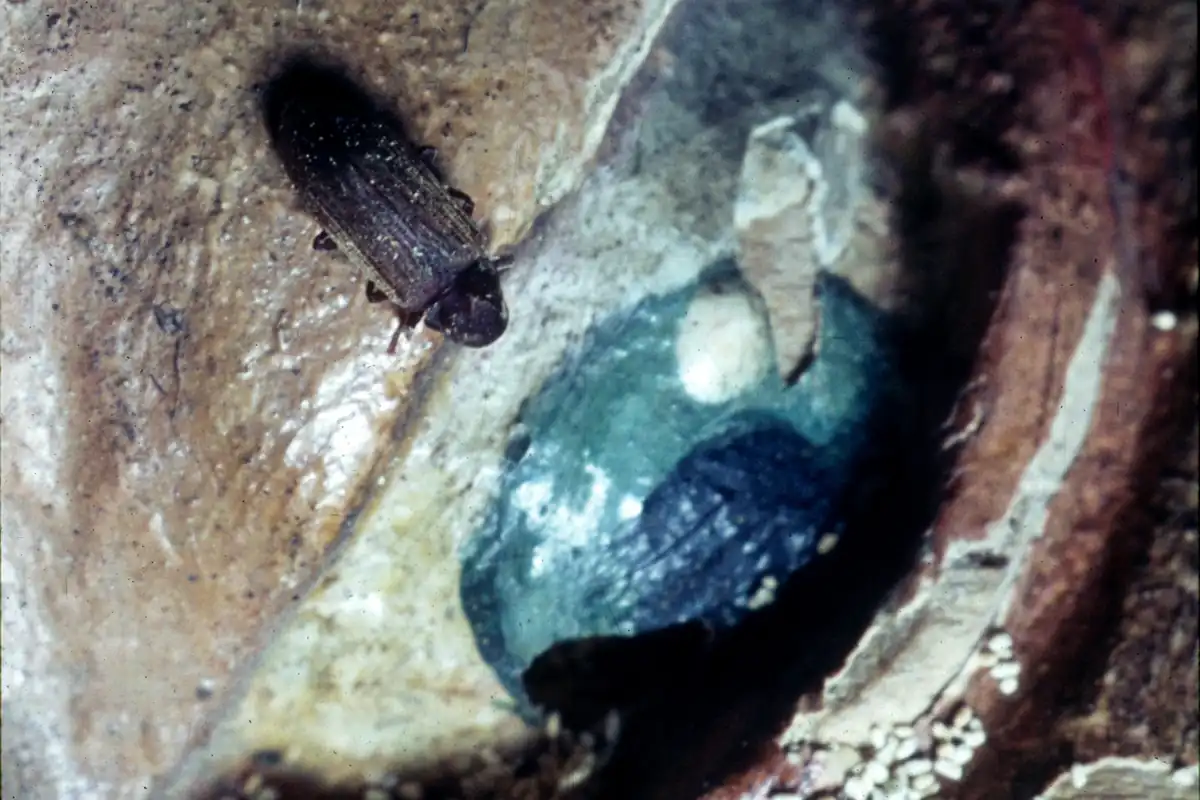
You don't see borer grubs because they never come out. They hatch from eggs laid in cracks, rough surfaces and old exit holes, bore straight in, and stay inside until they've become beetles. All you see are the results: tunnels packed with gritty dust, and the round hole the adult chews to get out. Fresh holes and new dust are therefore the only everyday signs of larvae.
Our answer on how to tell if borer is active explains how to read those signs, and borer dust covers the frass.
Borer under the floor or in the roof space? Get a written quote
How do treatments reach larvae deep in the wood?
Treatments reach larvae in two ways. A residual surface treatment on bare timber doesn't chase them deep inside: it waits in the outer layer, so every beetle chewing out and every new larva hatching in meets it, and the cycle ends. An injector goes further, pushing insecticide down flight holes into the tunnels of finished timber. Foggers don't reach larvae at all.
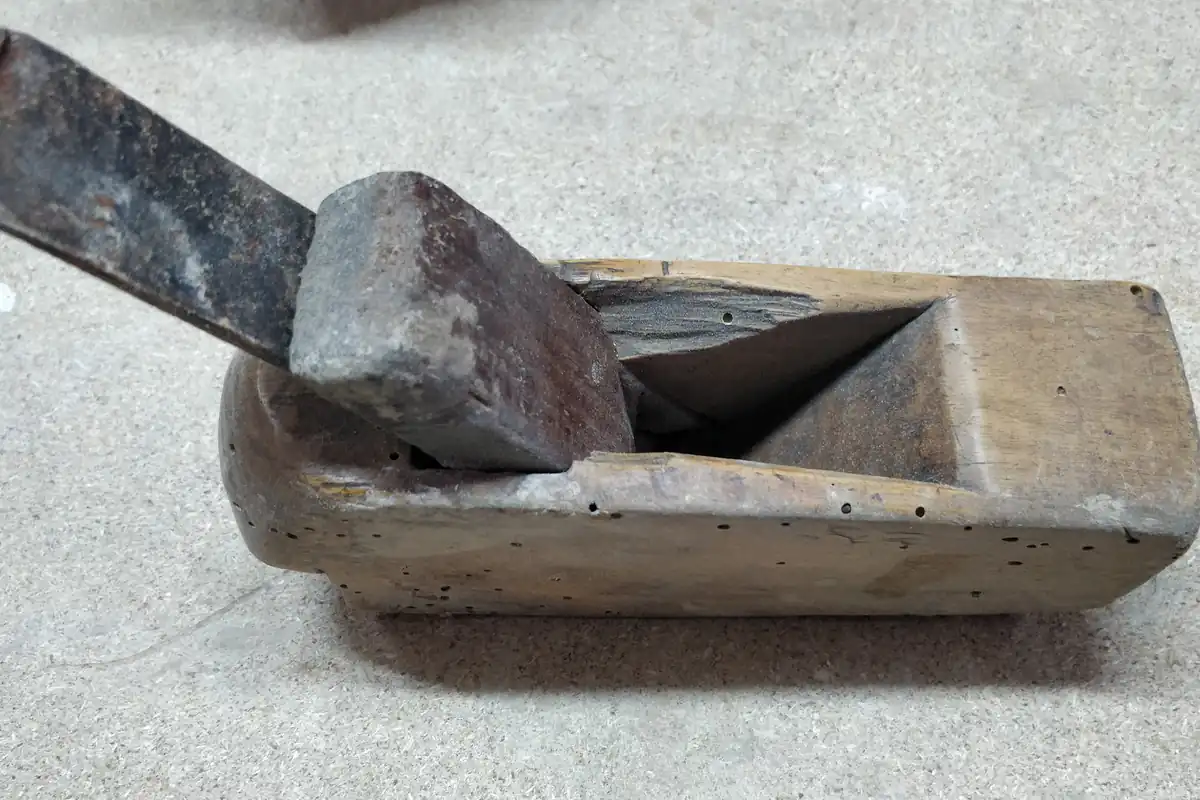
That's also why a surface treatment has to last years, not weeks. See how long borer treatment lasts and flight-hole injection.
Do the larvae weaken timber?
Larvae weaken timber gradually. NZFFA notes that their tunnels merge as an infestation progresses, and that repeated reinfestation of the same untreated timber can eventually destroy its structure. A light attack mainly spoils the surface with holes. Longhorn larvae are more serious, because they work through heartwood too and can leave a thin outer shell over hollowed timber.
Soft, crumbling or hollow-sounding timber is worth having checked, and replacing it with treated timber is building work, separate from treatment. The subfloor treatment page covers what a visit looks at.
Can you kill larvae without chemicals?
You can kill larvae in small items without chemicals by freezing or, more carefully, heating them, which museums use for wooden objects. That works for a carving or a picture frame, not a house. Nothing non-chemical reaches larvae spread through a subfloor or roof space. Our answers on freezing or heating furniture and natural borer treatment cover the options and their limits.
Questions people ask
What do borer eggs look like?
Common house borer eggs are tiny and white, laid into rough surfaces, cracks or old flight holes. They hatch in about four to five weeks. You won't normally see them, which is why bare timber needs a residual treatment.
Can larvae move from one piece of timber to another?
No. Larvae stay in the piece they hatched in. It's the adult beetles that spread borer, flying to new bare timber to lay eggs.
Once you know the beetle, the Borer Wise guide to Auckland borer explains the treatment that fits it.