The huhu grub life cycle, from egg to beetle
Most of a huhu's life is spent as a grub inside wet wood. Knowing the stages tells you where it came from and what actually stops it.
Facts and prices checked 8 November 2026
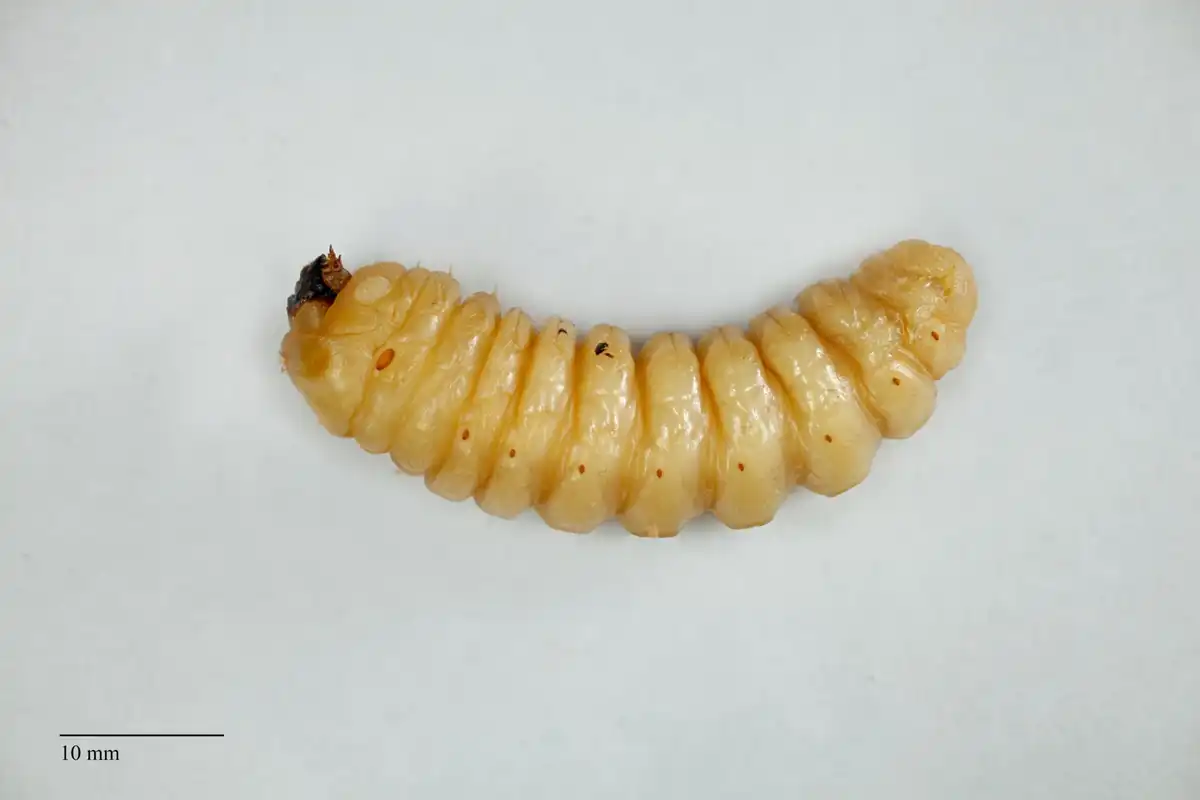
The huhu grub life cycle runs from egg to adult beetle in about two to three years, and almost all of that time is spent as a grub tunnelling through damp or rotting wood. Eggs are laid in summer and hatch after three to four weeks. The grub feeds for two to three years, pupates for about 25 days, then chews out as a beetle that lives only about two weeks and never feeds. The figures here come from Scion's huhu bulletin, published by NZFFA. For telling huhu apart from the smaller borers, see the huhu beetle guide.
How long is the huhu life cycle?
A huhu takes about two to three years to go from egg to beetle, and the grub stage is nearly all of it. Scion's bulletin gives three to four weeks for the egg, commonly two or three years for the grub, about 25 days as a pupa, and roughly two weeks as an adult. The grub stage stretches or shrinks with temperature, how wet the wood is and how nourishing it is.
| Stage | How long | Where | What you might see |
|---|---|---|---|
| Egg | 3 to 4 weeks | Crevices, under loose bark, old insect holes, between stacked boards | Clusters of 10 to 50 cream eggs, about 3 mm long |
| Grub (larva) | Commonly 2 to 3 years | Tunnelling through damp sapwood and heartwood | Tiny oval entry holes about 1 mm across, then packed, fibrous frass |
| Pupa | About 25 days | A pupal cell from just under the surface to 100 mm deep | Nothing from outside |
| Adult beetle | About 2 weeks | Flying at night, November to early March | Oval exit holes 10 to 20 mm long; beetles at lit windows |
The length of that grub stage is why huhu damage builds slowly and quietly. A piece of wet timber can carry grubs of several ages at once, and old logs can be reinfested year after year, so one stump or rotten bearer can keep producing beetles for a long time.
Where do huhu beetles lay their eggs?
Female huhu beetles lay their eggs in sheltered gaps on dead or damp wood: cracks, the underside of loose bark, the exit holes of other insects, and between boards in stacked timber. The eggs go down in groups of about 10 to 50, glued together with a clear secretion. Each is cigar-shaped and about 3 mm long, and they hatch after three to four weeks.
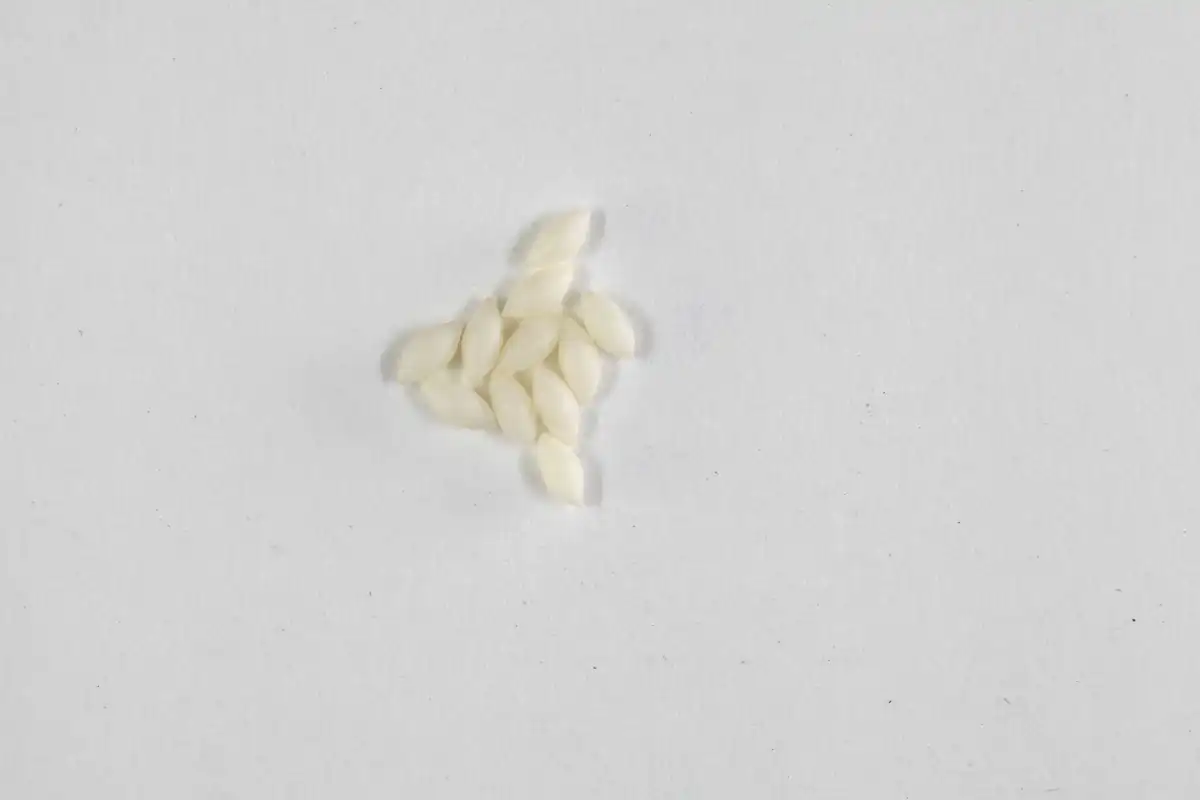
Because adults fly from November to early March, egg-laying happens over summer, and most eggs hatch between January and autumn. Timber yards near forests see eggs laid between block-stacked boards when conditions are moist, which is why export logs carrying eggs have to be fumigated before shipping. Around a house, the likely spots are firewood stacks, old fence posts, rotting deck joists and any timber left lying on damp ground.
Freshly hatched grubs bore straight into the wood under the egg mass, leaving small oval entry holes about 1 mm across. That's the last sign most people would ever see from the outside until a beetle chews its way out years later.
How long do huhu grubs live in the wood?
Huhu grubs usually live in the wood for two to three years, and they feed the whole time. Scion notes that the number of moults hasn't been worked out, but the grub stage commonly spans two or three years, longer in cold, drier or poor-quality wood. A mature grub is 50 to 70 mm long, fat and cylindrical, with shiny black triangular jaws and well-developed legs.
The grubs eat all the wood they cut and pack the waste behind them as coarse, fibrous pellets. In heavily infested wood their tunnels form a maze through both sapwood and heartwood, until only a thin outer shell is left. NZFFA's bulletin shows a 100 by 150 mm rimu structural member destroyed this way in damp conditions.
One identification tip from the same source: on the underside, just behind the head, a huhu grub has a pair of raised, shiny white patches. Combined with the size, that separates it from the much smaller common house borer larva, which is covered on our borer larvae page.
Why do huhu grubs need damp wood?
Huhu grubs need damp wood because newly hatched larvae can't establish in dry timber. Once they are bigger, grubs can keep developing in seasoned timber, but only while its moisture content stays at or above about 25%. Dry, sound framing in a ventilated house sits well below that, so the life cycle stalls before it starts. Wet wood is the condition that lets every later stage happen.
This is the most useful fact in the whole life cycle for a homeowner. It means huhu in house timber are almost never the first problem. They follow a leak, a wet subfloor, ground contact or rot, and they keep going only as long as the wood stays wet.
Treated timber gives some protection. Scion found that grubs often bore up to about 10 mm into preservative-treated wood before they start feeding properly, and then die. The catch is that treated timber kept wet for years can rot, and rotten wood is what huhu follow. More on that in can borer get into treated timber.
How do huhu grubs pupate?
A fully grown huhu grub pupates by carving a chamber, the pupal cell, anywhere from just under the bark or surface to about 100 mm deep in the wood, then plugging its open end with coarse strands of chewed wood. Inside, the grub becomes a pale, soft pupa with its legs and antennae folded against its body. Pupation takes about 25 days.
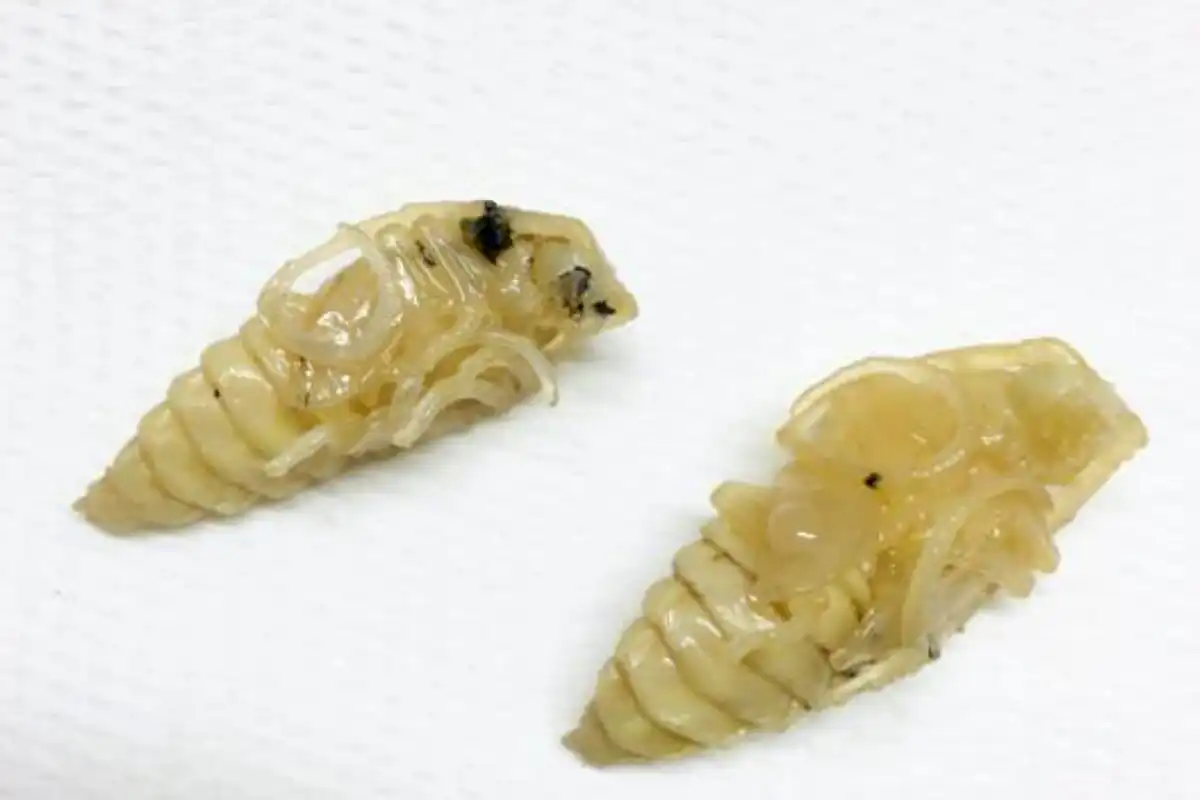
A few days after the pupa turns into a beetle, the adult chews out to the surface, leaving the large oval exit hole, 10 to 20 mm long, that is the classic sign of huhu. Since adults appear from November to early March, pupation falls in late spring and summer, just ahead of the flight season. The exit hole is the end of a story that started two or three years earlier.
How long do adult huhu beetles live?
Adult huhu beetles live for about two weeks and don't feed at all. Their only job is to mate and lay eggs. They emerge from November to early March, with the most beetles between mid-December and late February. They're strong night fliers and are drawn to lights, which is why they bang into lit windows and outdoor lamps on warm summer evenings.
A beetle at the window doesn't mean your house has huhu. Most have flown in from bush, old stumps, firewood or forestry nearby. Killing it changes nothing, and since it won't feed, it can't damage anything either. Put it outside. The borer treatment timing guide lines up the huhu flight season against the common borer's.
Plenty of animals eat huhu along the way. NZFFA lists mice, hedgehogs, magpies, moreporks, sparrows and wild pigs, plus click beetle larvae that feed on the grubs and a tiny wasp that parasitises the eggs. Scion's view is that none of them makes much difference to numbers. Available wet softwood is what really limits huhu.
What does the huhu life cycle mean for your house?
The huhu life cycle means treatment starts with the moisture, not with insecticide. Grubs only establish in damp wood, live there for years, and leave as short-lived beetles that don't feed. So spraying adults or the surface of rotting timber does little. Fix the water, remove and replace the rotten wood the grubs are living in, and keep the replacement timber dry so the cycle can't restart.
Borer under the floor or in the roof space? Get a written quote
A practical order of work:
- Find the source of the water. Leaking plumbing, flashings, gutters, cladding and poor subfloor drainage are the usual culprits.
- Cut out the riddled timber. Wood that's been tunnelled for two or three years has lost much of its strength, and structural timber needs a builder's eye.
- Replace it with treated timber, within the Building Act's limits for repairs.
- Dry the area. A ground moisture barrier and clear vents keep a subfloor below the 25% moisture level huhu need. The subfloor treatment page covers this.
- Treat surrounding bare timber if common house borer is active too, which is common in damp subfloors.
- Move breeding sites away from the house. Firewood stacks, old stumps and timber on the ground can produce beetles for years.
For the wider plan, see borer prevention, or go back to the overview of treating borer in Auckland homes.
Questions people ask
How long does a huhu grub take to turn into a beetle?
Usually two to three years as a grub, then about 25 days as a pupa. The whole cycle from egg to beetle is roughly two to three years, slower in cooler or drier wood.
What time of year do huhu grubs pupate?
Late spring and summer. Adults emerge from November to early March and pupation takes about 25 days, so most grubs pupate in the weeks before the flight season.
Can huhu grubs live in dry timber?
Young grubs can't get started in dry wood. Older grubs can carry on in seasoned timber only while its moisture content stays at or above about 25%, which dry indoor framing doesn't reach.
Do huhu beetles eat wood?
No. Adult huhu don't feed at all and live about two weeks. All the wood damage is done by the grubs during their two to three years inside the timber.