Titirangi: borer, huhu and life in the bush
Houses tucked into wet native bush on steep slopes face a different borer problem from the villa suburbs: damp.
Facts and prices checked 5 November 2026

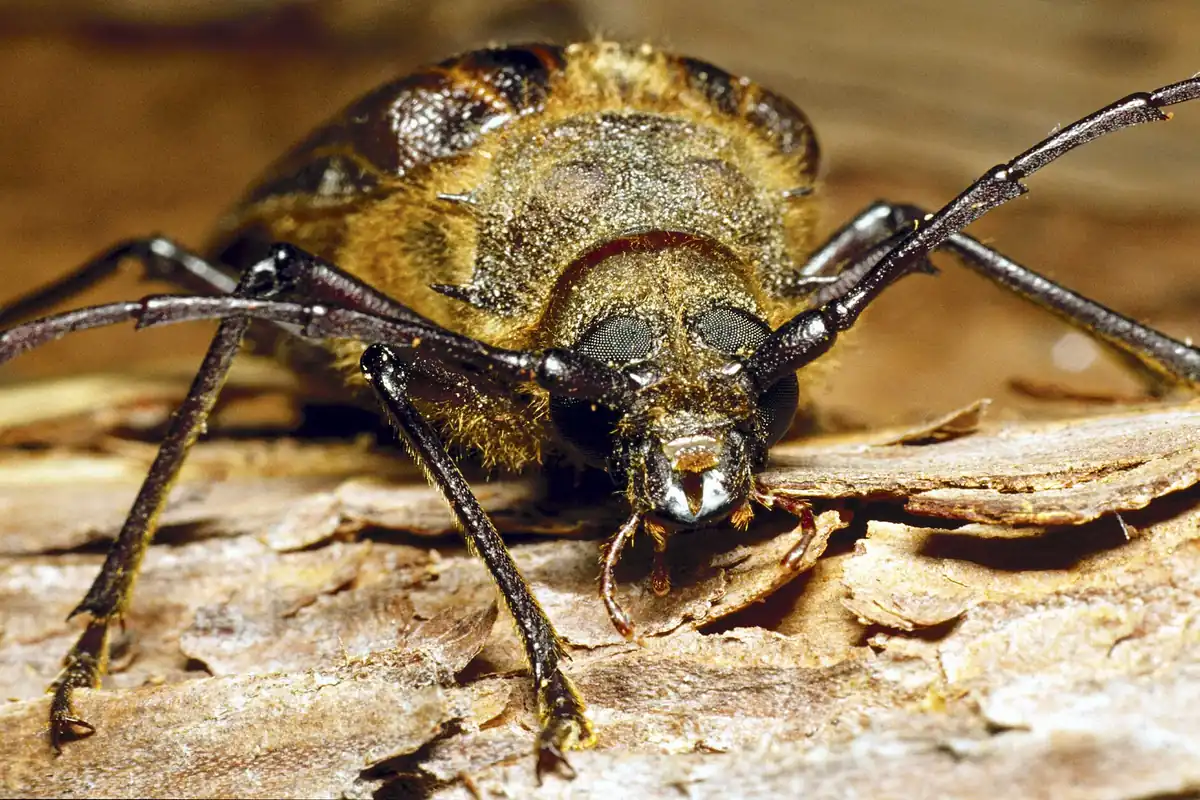
Titirangi sits in the foothills of the Waitākere Ranges, whose bush-clad hills lie in the path of the prevailing westerlies from the Tasman and attract high rainfall. Most of its houses are set among native trees on steep sections, and the suburb grew mainly once road access improved in the 1960s. That combination of wet bush, shade and sloping subfloors means borer treatment here is tied up with moisture: damp timber suits the common borer, and wet or rotting timber brings huhu. We arrange a technician to visit anywhere in Titirangi, Laingholm, Woodlands Park, Waiatarua or French Bay, and quote in writing first. For huhu specifically, see the huhu beetle page.
Why is damp the main borer issue in Titirangi?
Damp is the main issue because so many Titirangi houses sit under trees, on shaded slopes, in one of the wettest parts of Auckland. Subfloors and decks stay humid for long periods, and the common borer develops fastest in timber above about 70% relative humidity. Huhu larvae need moist wood to establish, and rot follows wherever timber stays wet. Treating borer without drying the timber treats the symptom.
So a Titirangi borer visit usually looks at moisture as much as insects: drainage, ventilation, leaks, and timber in contact with soil or leaf litter.
Which parts of a bush house are most at risk?
The parts most at risk are the ones that stay wet: deck framing, exposed bearers and posts, steps, timber retaining walls, the low side of a sloping subfloor, and anything buried in leaf litter. Many houses here have timber decks and pole or post foundations on steep ground, and the undersides of those decks rarely dry out. Huhu and rot show up there first, with common borer in the drier framing nearby.
| Location | Usual problem | Response |
|---|---|---|
| Deck joists and bearers | Damp, rot, huhu | Replace rotten timber with treated; improve drainage |
| Low side of a sloping subfloor | Persistent damp, borer | Treat framing; ground cover and ventilation |
| Roof space under heavy tree cover | Borer in untreated framing | Residual treatment |
| Timber retaining walls | Rot, huhu | Replace with ground-contact treated timber |
| Firewood stacked against the house | Borer and huhu carried in | Move it away from the house |
How do steep sections affect treatment?
Steep sections affect treatment through access. A technician may need to carry gear down long paths or steps, work under a high deck on sloping ground, or reach a subfloor that's tall at one end and a crawl space at the other. That takes time and care, and it's allowed for in the written quote. Tell us about steps, steep driveways and where the subfloor access is before the visit.
Borer under the floor or in the roof space? Get a written quote
Parking on narrow, winding roads can also be limited, so mention whether there's room to pull off the road near the house.
Is it worth treating if the timber stays damp?
It's worth treating sound timber, but only alongside drying it out. A residual treatment protects bare timber surfaces for years, and it works on damp timber, but huhu and rot don't respond to insecticide: timber they've ruined needs replacing. The best results in Titirangi come from fixing drainage and ventilation, replacing soft timber with treated wood, then treating the remaining sound framing.
The order that usually works:
- Find and fix water: gutters, downpipes, deck drainage, leaks.
- Replace rotten or huhu-riddled timber with treated timber.
- Treat the sound, bare framing with a residual product.
- Keep leaf litter, soil and firewood away from timber.
Our prevention guide and subfloor treatment page cover steps 3 and 4.
Are there special rules for building work in the Waitākere Ranges?
The Waitākere Ranges Heritage Area Act 2008 recognises the area's natural and heritage character, and Auckland's planning rules for the ranges' foothills reflect that, particularly around tree removal and new building. A borer treatment doesn't involve any of that. Larger repairs, deck rebuilds or anything touching protected trees may need council advice first, so check with Auckland Council before major work.
What houses in Titirangi are most likely to have borer?
Older bach-style houses and mid-century homes built with untreated timber are most likely to have borer, along with any house that has had long-term damp. Houses from the late 1990s to 2004 may have untreated kiln-dried framing, which was allowed then. Newer houses with treated H1.2 framing resist borer, though damp decks and outdoor timber can still attract huhu and rot.
What does treatment cost in Titirangi?
Prices follow the published Auckland ranges: roughly $350 to $600 for a roof space, $450 to $750 for a subfloor, and about $800 to $1,350 for both. Steep access, high decks and sloping subfloors take longer and can push a price up. Replacing rotten timber is building work and quoted separately. You get your price in writing after the visit; see the cost page for detail.
Questions people ask
Are huhu beetles at the window a sign of infestation?
Not on their own. Huhu fly in from the surrounding bush on summer nights. Large oval holes in your own damp timber are the sign to act on.
Can borer treatment be sprayed near native bush?
Residual treatments are applied to timber, not sprayed into the air, and labels warn against contaminating water. A technician keeps product on the timber and away from streams and drains.
Do you cover Laingholm and Waiatarua?
Yes. Visits are arranged across the eastern Waitākere foothills, including Laingholm, Woodlands Park, Waiatarua, Konini and Glen Eden.
The treatment methods are the same in every suburb and are explained at Auckland borer treatment.