Does painting stop borer?
Paint is good borer prevention on the face it covers, and no treatment at all for the borer already inside.
Facts and prices checked 5 November 2026

Painting doesn't stop borer that's already in the timber. It does help prevent new attack on the painted face, because the beetle lays its eggs on rough, bare surfaces, cracks and old exit holes, and a sound paint film covers those. Larvae already inside keep feeding and chew straight out through fresh paint, and unpainted faces (the backs of weatherboards, the undersides of boards, framing) stay open to egg-laying. The order that works is treat, wait, fill, then paint. Our guide to exterior timber applies this to weatherboards and joinery.
Why doesn't paint kill borer?
Paint doesn't kill borer because it contains no insecticide and only coats the outside surface. The larvae are millimetres to centimetres inside the wood, feeding on sapwood for three to four years. When they become beetles, they chew a round exit hole through whatever is in the way, paint included. That's why new holes appearing through a freshly painted wall are so common.
Does paint stop new borer getting in?
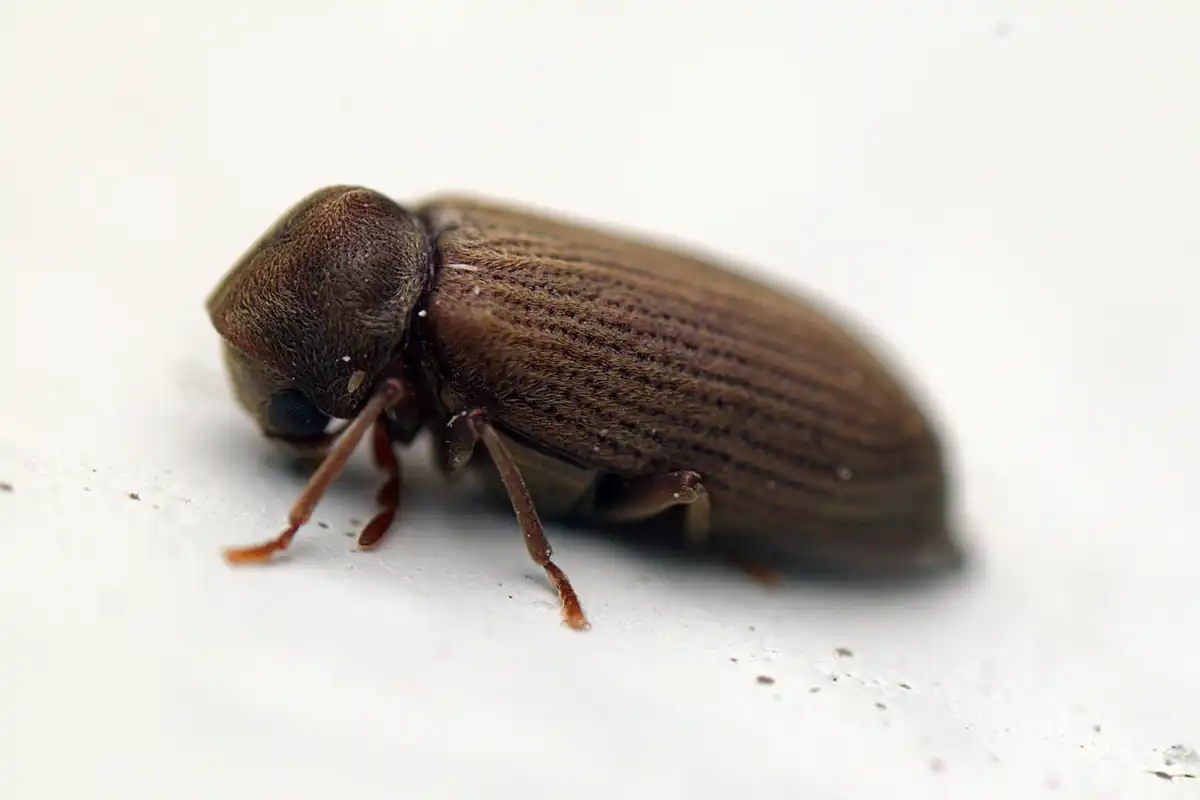
Paint does stop new borer getting in through the painted face, as long as the film is sound. Female beetles lay eggs into rough surfaces, cracks and old flight holes, according to NZFFA. A continuous paint film removes most of those places. Cracked, flaking paint and open holes give them back. So sound paint is good prevention, on that face only.
| Surface | Protected by paint? |
|---|---|
| Painted face, sound film | Yes, from new eggs |
| Painted face with open holes or cracks | Partly; eggs can go into holes and cracks |
| Back of a weatherboard | No, it's bare |
| Underside of floorboards | No, it's bare |
| Framing, rafters, joists | No, unless treated |
Should you treat borer before painting?
Yes, treat before painting. Once paint is on, a surface treatment can't soak into that face, so you're left with injection, hole by hole. Before painting, bare timber can take a residual borer product across the whole surface. Let it soak in and dry as the label directs, and test that your primer goes on well over it on a hidden spot.
Borer under the floor or in the roof space? Get a written quote
The sequence for a painting job on timber with borer:
- Inject live flight holes and treat any bare faces you can reach.
- Wait for the treatment to dry; ideally watch one flight season.
- Fill holes once you're confident the borer has stopped.
- Prime and paint, priming all faces of any new timber first.
Our answer on filling borer holes covers step 3.
What about varnish, oil and wax?
Varnish, oil and wax behave much like paint. A hard varnish or polyurethane film seals the face against egg-laying, but larvae inside chew through it. Oils soak in rather than forming a film, so they protect less. Wax sits on the surface. On all of them, existing borer is treated by injecting the flight holes, as described on the flight-hole injection page.
For floors, the best moment is between sanding and finishing, when the boards are bare. See treating borer in timber floors.
Can paint hide a borer problem?
Paint can hide a borer problem for a while. Fresh paint covers old holes and, for a season, the new ones, and filler can hide soft timber underneath. Weatherboards are the classic case: borer works from the bare inside face, and the paint can look sound over a hollow board. If you're buying or repainting an older house, press suspect boards and look at the subfloor and roof space too.
Questions people ask
Will borer come through new paint?
Yes, if there are live larvae in the timber. They chew out through paint when they emerge as beetles. Treat first, then paint.
Is there paint that kills borer?
Ordinary paints don't contain borer insecticide. Treat bare timber with a borer product first, let it dry, then prime and paint.
Should I paint the back of weatherboards?
Priming all faces of new weatherboards before they're fixed is good practice for durability and leaves less bare timber for borer. Existing boards can't be reached from behind without removing them.
Short answers like this one feed into Borer Treatment Auckland, which sets out every option from DIY to a professional visit.